

What's Happening?
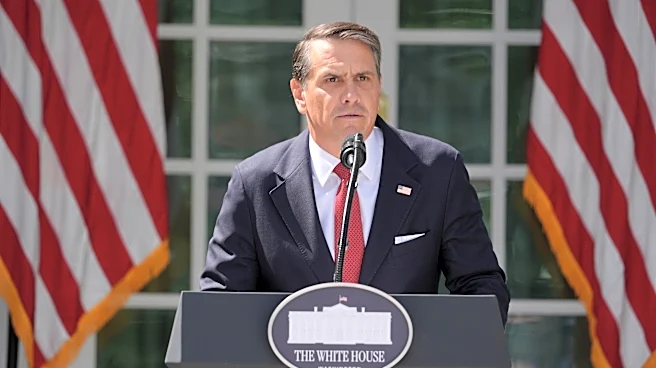
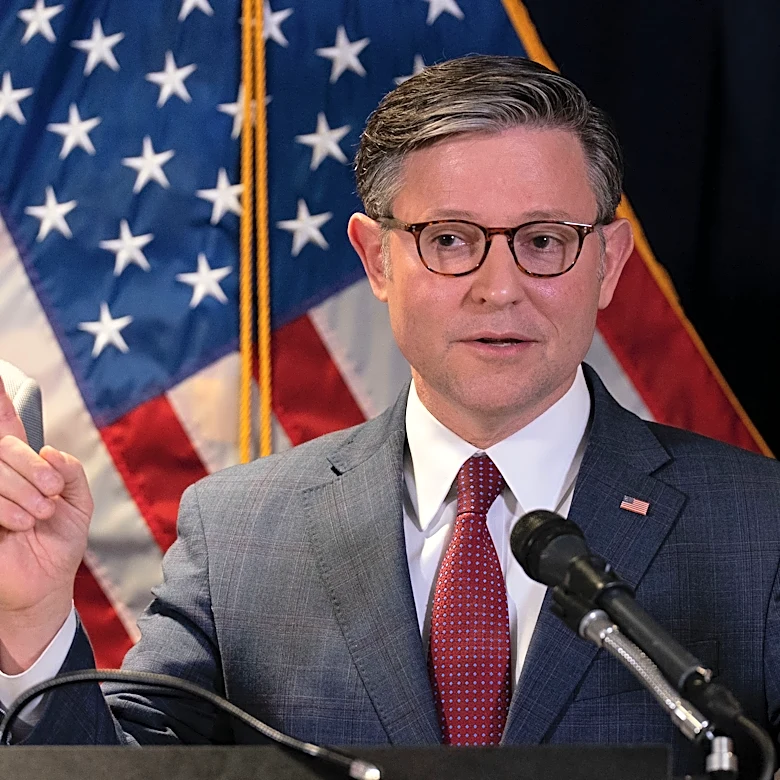
Vice President J.D. Vance recently addressed House Republicans in a closed-door meeting, urging them to focus on economic frustrations and promote the Trump administration's economic policies in the lead-up to the 2026 midterm elections. Vance advised
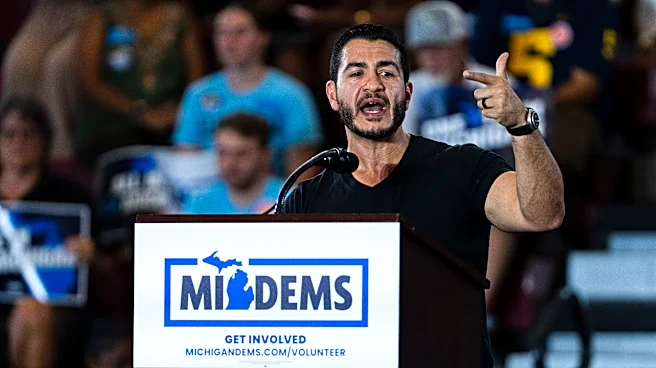
Republicans in safe districts to campaign with colleagues and raise funds, setting a goal of $10 billion for GOP candidates. He also suggested that if their direct opponents are not perceived as 'crazy,' they should instead target prominent Democratic Senate nominees like Michigan's Abdul El-Sayed. Vance acknowledged that Americans might not be entirely satisfied with the current state of the country but attributed existing problems to Democrats, framing the administration's efforts as diligently fixing issues inherited from the previous administration. This approach contrasts with President Trump's more optimistic economic messaging.
Why It's Important?
Vice President Vance's strategic guidance to House Republicans highlights the administration's focus on economic messaging and fundraising as critical components for the upcoming midterms. By encouraging Republicans to acknowledge voter frustrations while simultaneously blaming Democrats and touting the administration's economic achievements, Vance aims to shape the narrative and mobilize support. The emphasis on targeting specific Democratic candidates, even for Republicans in safe districts, suggests a coordinated effort to influence broader electoral outcomes and potentially shift public perception of the Democratic party. The ambitious fundraising goal of $10 billion underscores the significant financial resources the Republican party intends to deploy to counter what Vance referred to as the 'crazy left-wing media,' indicating a high-stakes electoral battle.
What's Next?
Following Vice President Vance's directives, House Republicans are expected to intensify their focus on economic messaging, emphasizing the administration's policies and attributing any ongoing frustrations to the Democratic party. The call for Republicans in safe districts to support their colleagues through campaigning and fundraising suggests a concerted effort to maximize the party's electoral performance across various races. The targeting of prominent Democratic figures like Abdul El-Sayed is likely to become a recurring theme in Republican campaign rhetoric, potentially escalating political discourse and drawing increased attention to these specific races. The success of the $10 billion fundraising goal will be a key indicator of the party's ability to execute its midterm strategy and influence public opinion through extensive media campaigns.
Beyond the Headlines
Vice President Vance's strategy reveals a nuanced approach to political communication, where acknowledging public frustration is coupled with a clear attribution of blame and a narrative of ongoing progress. This tactic aims to resonate with voters who may feel economically strained while simultaneously reinforcing party loyalty and discrediting opposition. The emphasis on fundraising and media parity also points to the increasing role of financial resources in shaping political narratives and influencing electoral outcomes. Furthermore, the strategy of using specific Democratic candidates as 'boogeymen' could contribute to a more polarized political landscape, where national figures become proxies for broader ideological battles, even in local or state-level races. This approach could have long-term implications for political civility and the nature of public debate.