
What's Happening?
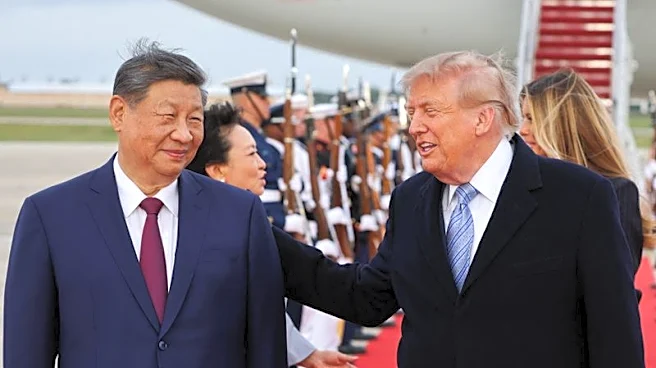
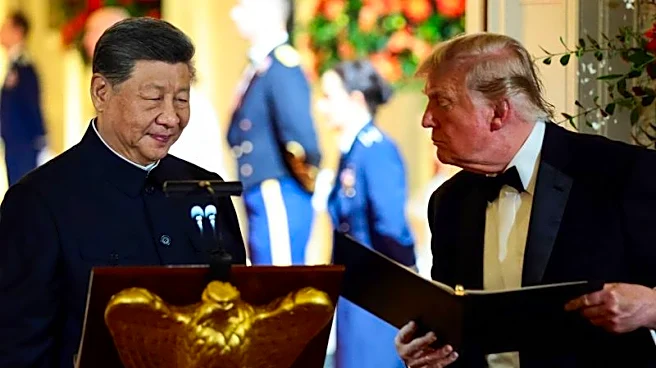
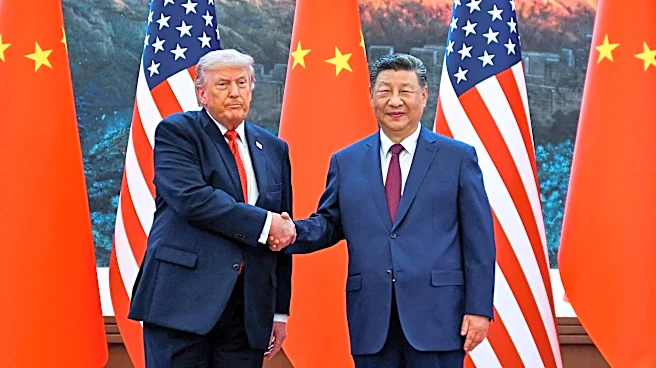
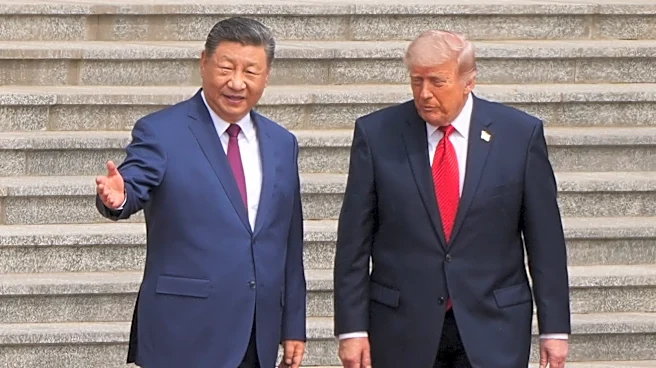
The U.S. Congressional-Executive Commission on China (USCC) is analyzing the complex strategic rivalry between the United States and China, a relationship characterized by geopolitical tension, economic
competition, and ideological divergence. This dynamic is central to understanding 21st-century international affairs, as both nations vie for influence across various sectors. The relationship has evolved from initial hostility to cautious engagement and now to explicit strategic competition, driven by differing visions of global order. The U.S. views China's rise as an attempt to reshape the global system, while China aims for national rejuvenation and greater representation in global governance. This rivalry extends beyond bilateral ties, influencing global standards, cybersecurity norms, and digital infrastructure. Economic interdependence remains significant, with the U.S. being China's largest trading partner and China accounting for a substantial portion of U.S. total trade. However, strategic decoupling efforts, particularly in high-tech sectors, have accelerated under recent U.S. administrations, leading to export controls on advanced technologies like AI and quantum computing. China has responded by prioritizing domestic innovation and technological self-reliance through initiatives like 'Made in China 2025'.
Why It's Important?
The U.S.-China strategic rivalry holds immense importance for global stability and the future of international relations. The competition over technology, military influence, and economic dominance directly impacts U.S. industries, national security, and global supply chains. U.S. policies aimed at reducing dependency on Chinese supply chains and imposing export controls on advanced technologies are designed to safeguard American technological superiority and national security. This recalibration, while costly, is seen as necessary to mitigate systemic risks. The military posturing in the Indo-Pacific, with the U.S. strengthening alliances and China modernizing its military, raises concerns about regional stability and potential escalation, particularly in flashpoints like the South China Sea and Taiwan. The lack of robust crisis communication mechanisms between the two powers further amplifies these risks. Economically, the competition affects global trade patterns, investment flows, and the development of critical technologies. The outcome of this rivalry will determine whether the global order shifts towards deeper conflict or a managed coexistence, impacting economic stakeholders, political leaders, and civil society groups worldwide.
What's Next?
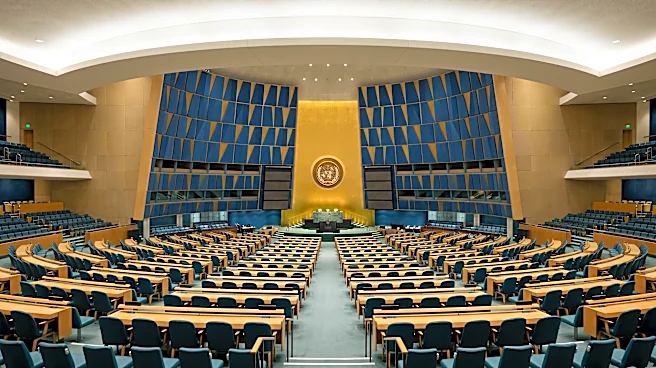
The future trajectory of the U.S.-China relationship will depend on how both nations navigate the duality of competition and cooperation. The USCC emphasizes the need for policies that balance competition with dialogue, applying pressure while preserving channels for crisis avoidance. This suggests a continued focus on calibrated statecraft to safeguard interests without triggering escalation. Efforts to invest in resilience and explore collaboration on shared global challenges like climate change and pandemic preparedness are likely to continue. Diplomatic engagements, potentially involving third-party mediation, may play a role in easing tensions, as seen with recent Vatican-mediated discussions. Both countries will likely continue to maneuver for influence in multilateral institutions, with China advocating for greater representation and the U.S. working with allies to counterbalance China's sway. The ongoing technological competition will see further U.S. restrictions on advanced tech exports and continued Chinese investment in domestic innovation. The military dynamics in the Indo-Pacific will remain a critical area of focus, with both sides likely to maintain their presence and conduct exercises, necessitating careful diplomacy to prevent miscalculations.
Beyond the Headlines
The U.S.-China rivalry extends beyond immediate policy decisions, touching upon deeper ethical, legal, and cultural dimensions. The competition over technological dominance, particularly in AI and quantum computing, raises questions about the ethical implications of these advancements and who will set the global standards for their use. The push for technological self-reliance by both nations could lead to a more fragmented global tech landscape, potentially impacting innovation and access to technology worldwide. Culturally, the rivalry influences public perception in both countries, with narratives often amplifying tensions. While official diplomacy may fluctuate, the long-term implications for societal trust and understanding are significant. The shift towards a multipolar world order, where ancient cultures assert their worldviews, challenges the traditional Western-centric global system. This necessitates a re-evaluation of international governance structures and the development of more inclusive multilateral frameworks. The ability of the U.S. and China to find common ground on global challenges, despite their strategic differences, will be crucial for addressing issues that transcend national borders and require collective action.