


What's Happening?
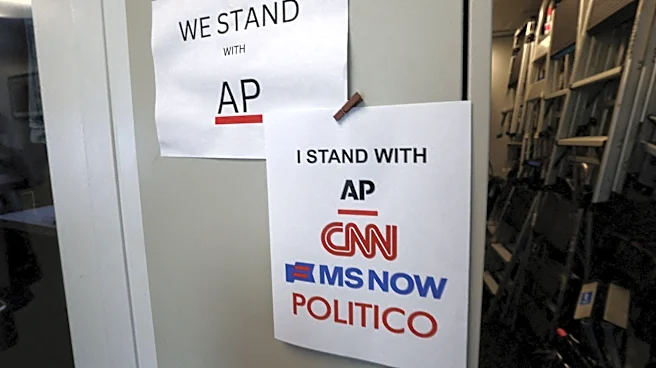
A federal judge has issued an order requiring the White House to reinstate full access for three news organizations—CNN, Politico, and MS NOW—that had previously been denied entry by the administration. The judge's decision mandates that the executive
branch immediately cease any discriminatory denial of press credentials and allow journalists to resume their duties in the West Wing without further obstruction. White House officials have stated they will comply with the court's order, affirming their commitment to the First Amendment and ensuring all accredited reporters are welcomed back. The news outlets involved have expressed that the ruling restores the long-standing tradition of a free press and thanked the judiciary for upholding press access.
Why It's Important?
This judicial intervention underscores the critical role of the judiciary in upholding First Amendment rights and maintaining the balance of power in the U.S. government. The decision reinforces the principle that press access to the White House is not a privilege to be selectively granted or denied based on administrative preferences, but a fundamental aspect of a free and informed public. For the affected news organizations, it means the restoration of their ability to directly cover the executive branch, providing timely and unfiltered information to their audiences. This ruling sets a precedent that could deter future administrations from arbitrarily restricting press access, thereby safeguarding journalistic independence and the public's right to know. It also highlights the ongoing tension between government control over information and the constitutional protections afforded to the press.
What's Next?
The White House is expected to promptly comply with the court order, which will involve re-integrating the previously banned reporters into the daily briefing schedule and restoring their access to the West Wing. This process will require logistical adjustments within the White House Press Office. Political analysts anticipate that this ruling will be closely watched by other media organizations and could influence future interactions between the press and government. The judiciary has made it clear that non-compliance could lead to further legal remedies, including contempt proceedings, ensuring that the White House adheres to the order. The focus will now shift to how smoothly this transition occurs and whether the restored access leads to a more open and less contentious relationship between the administration and the press.
Beyond the Headlines
Beyond the immediate restoration of press credentials, this ruling has deeper implications for the democratic process and the concept of a free press in the United States. It highlights the judiciary's role as a check on executive power, particularly when that power impacts fundamental constitutional rights. The incident also brings to light the evolving challenges faced by journalists in an increasingly polarized media landscape, where the line between legitimate reporting and perceived political opposition can become blurred. The court's emphasis on non-discriminatory access reinforces the idea that all accredited journalists, regardless of their publication's perceived stance, should have equal opportunity to cover the government. This decision could contribute to a broader conversation about media ethics, government transparency, and the essential function of a robust and independent press in a democratic society.