




What's Happening?
AAA forecasts that approximately 45 million Americans will travel at least 50 miles from home during the upcoming Memorial Day weekend. This represents a slight increase of 0.4% from last year's figures, setting a new record for the holiday. Despite the national
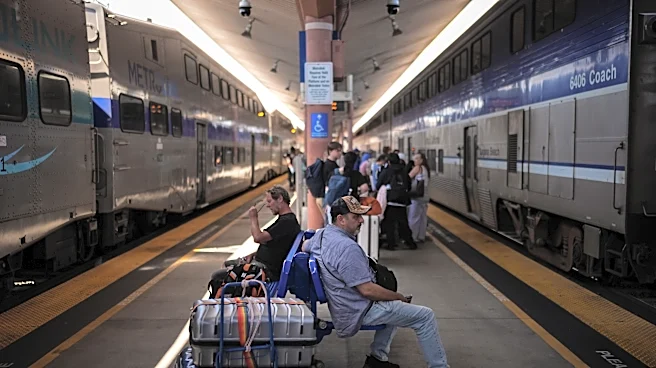
average gas price rising to $4.52 per gallon, up $1.39 from the previous year, 39.1 million people, or 87% of travelers, are expected to travel by car. The best times to travel by car are late Thursday and early Friday and Saturday, while the heaviest traffic is anticipated in the afternoon hours. Air travel is also expected to see a slight increase, with 3.66 million travelers flying domestically. The average round-trip domestic flight ticket is priced at $800, which is 6% cheaper than last year. Other modes of transportation, including buses, trains, and boats, are projected to increase by 5.3%, driven by the start of the Alaska cruise season.
Why It's Important?
The projected increase in travel during Memorial Day weekend highlights the resilience of leisure travel demand despite rising fuel costs. This trend suggests that many Americans are prioritizing travel and leisure activities, potentially boosting the travel and tourism industry. The increase in travel could have significant economic implications, as it may lead to higher spending in various sectors, including hospitality, dining, and retail. However, the high gas prices could also strain household budgets, affecting consumer spending in other areas. The travel patterns observed during this period could provide insights into consumer confidence and economic recovery trends post-pandemic.
What's Next?
Travelers can expect varying traffic conditions, with lighter traffic anticipated on Sunday and heavier traffic on Monday. The travel industry may continue to monitor fuel prices and their impact on travel behavior. Additionally, the ongoing Alaska cruise season could influence future travel trends, as more people opt for alternative modes of transportation. Stakeholders in the travel and tourism industry may need to adapt their strategies to accommodate changing consumer preferences and economic conditions.