



What's Happening?
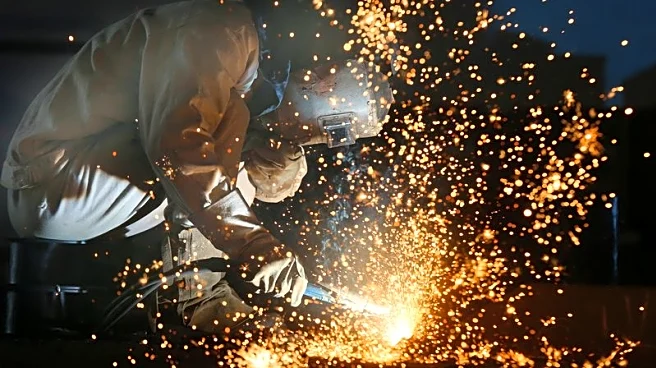
China's manufacturing sector experienced its fastest growth in a year, as indicated by the official March manufacturing Purchasing Managers' Index (PMI) which rose to 50.4 from February's 49.0. This growth is attributed to improved demand, providing a temporary
relief for an economy facing global supply chain challenges and energy market volatility. The non-manufacturing PMI, covering services and construction, also increased to 50.1. However, the ongoing war in the Middle East poses significant risks, potentially affecting manufacturers reliant on exports. Rising energy prices and geopolitical tensions are creating uncertainties for policymakers and businesses, with concerns about the durability of this growth.
Why It's Important?
The growth in China's manufacturing sector is significant as it suggests a potential stabilization in one of the world's largest economies, which could have ripple effects on global markets. However, the ongoing Middle East conflict and rising energy prices could undermine this growth, affecting global supply chains and economic stability. For U.S. businesses, particularly those involved in trade with China, these developments could impact import costs and supply chain reliability. Additionally, the geopolitical tensions could influence global economic policies and trade agreements, affecting U.S. economic interests.
What's Next?
As the situation in the Middle East evolves, it is likely to influence China's economic policies and its trade relations with other countries, including the U.S. Policymakers may need to implement structural measures to mitigate the impact of rising energy prices and geopolitical tensions. Businesses in the U.S. and globally will need to monitor these developments closely, as they could affect trade dynamics and economic forecasts. The potential for a slowdown in global growth and supply chain disruptions remains a concern, necessitating strategic planning and risk management by affected industries.