




What's Happening?
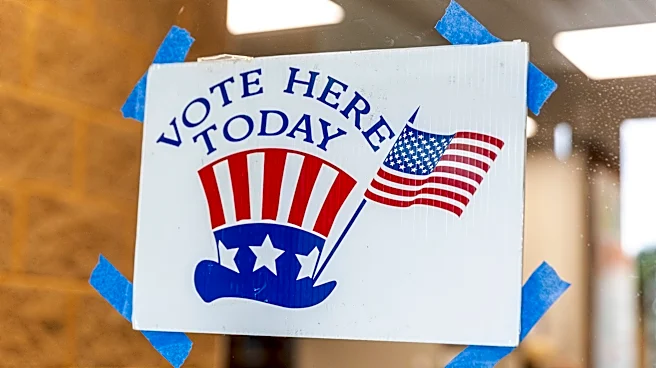
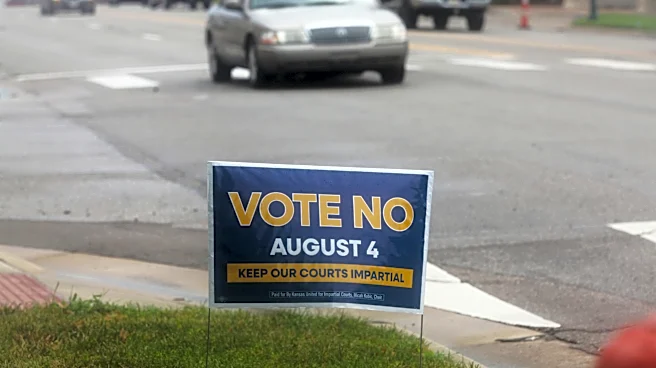
The Bourbon County Clerk's office has released the official list of candidates and a constitutional amendment question for the upcoming Kansas Primary Election on August 4, 2026. Voters will decide on various positions, including United States Senator,
U.S. House of Representatives for District 2, Kansas Governor, and other state and local offices. A significant item on the ballot is a proposed constitutional amendment that would allow Kansas citizens to elect Supreme Court justices, replacing the current system where a nominating commission provides a list of candidates to the governor. This amendment proposes that justices serve six-year terms, with elections staggered over several years. The outcome of this vote could significantly alter the judicial selection process in Kansas.
Why It's Important?
The Kansas Primary Election is crucial as it will determine candidates for the general election and potentially reshape the state's judicial selection process. The proposed constitutional amendment is particularly significant as it shifts the power of selecting Supreme Court justices from a commission to the electorate, potentially increasing public influence over the judiciary. This change could impact the balance of power within the state government and affect how laws are interpreted and enforced. The election outcomes will also influence the political landscape in Kansas, affecting policy decisions on key issues such as education, healthcare, and economic development. The results could have long-term implications for the state's governance and its residents.
What's Next?
Following the primary election, successful candidates will prepare for the general election, where they will face opponents from other parties. The decision on the constitutional amendment will determine whether the current judicial selection process remains or if a new system is implemented. If the amendment passes, the state will need to establish rules and procedures for electing justices, which could involve legislative action and public input. The election results will also set the stage for future policy debates and legislative priorities in Kansas. Stakeholders, including political parties, advocacy groups, and voters, will closely monitor the outcomes to strategize for the general election and beyond.