






What's Happening?
New research suggests that the asteroid impact which led to the extinction of the dinosaurs also created a long-lasting underground environment conducive to life. An international team of researchers analyzed samples from the Chicxulub crater in Mexico,
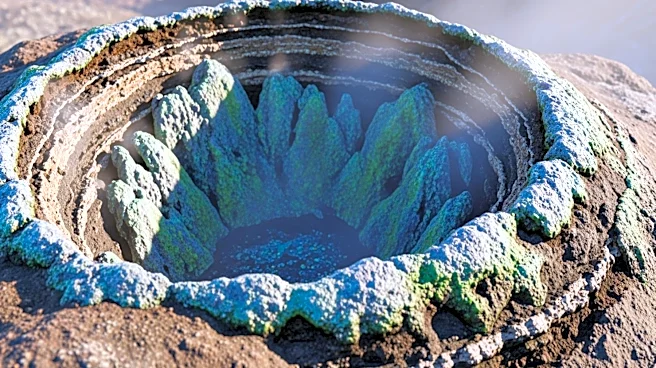
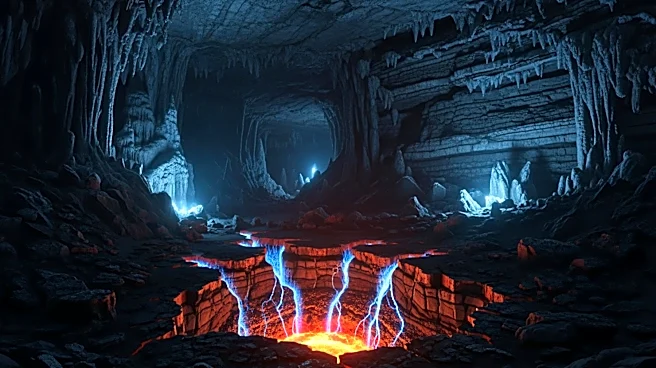
where the asteroid struck 66 million years ago. Their findings, published in Communications Earth & Environment, indicate that the hydrothermal system created by the impact persisted for at least 8 million years, much longer than previously thought. The impact's immense heat caused fractured rocks and hot water to form a hydrothermal system beneath the crater, providing conditions suitable for microbial life. This discovery was made possible through advanced computer modeling and analysis of feldspar samples collected during a 2016 drilling expedition.
Why It's Important?
The study's findings have significant implications for understanding the origins of life on Earth and the potential for life on other planets. The prolonged existence of the hydrothermal system suggests that similar conditions could have supported life in Earth's early history. Moreover, the research provides insights into how life might exist on other planetary bodies, such as Mars, where asteroid impacts are more common. The porous rocks created by such impacts could offer microenvironments that protect microorganisms from harsh conditions, allowing life to thrive. This research could guide future space missions in identifying impact craters on other planets that might have sustained life.
What's Next?
The research team plans to continue exploring the geological conditions that allow such long-lived hydrothermal systems to exist. Their work could inform future space exploration missions, particularly those targeting Mars, by identifying potential sites where life might have been sustained. The study also opens up new avenues for understanding the role of asteroid impacts in shaping planetary environments and their potential to harbor life.
Beyond the Headlines
The research highlights the complex interactions between heat, rock composition, and water flow that can result from asteroid impacts. These findings underscore the importance of interdisciplinary approaches in studying planetary geology and astrobiology. The study also raises questions about the resilience of life and its ability to adapt to extreme environments, which could have broader implications for understanding life's potential beyond Earth.