






What's Happening?
Andres Zubizarreta, a junior computer science major at Florida International University (FIU), recently participated in a G20 'fly-in' seminar in Washington, D.C. The three-day event, organized by FIU's center in Washington, D.C., focused on trade, collaboration,
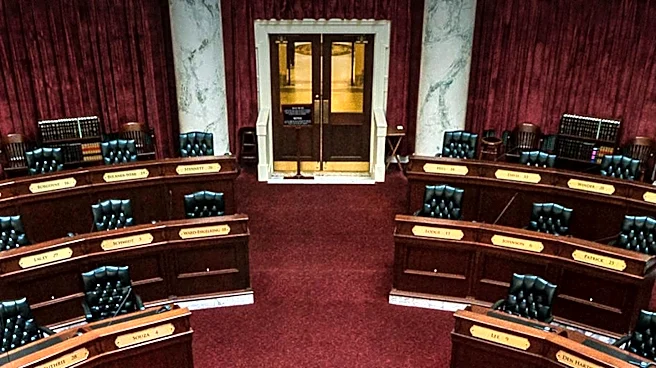
and technology/innovation in preparation for the upcoming G20 Summit in Miami. Zubizarreta met with diplomats, economists, and policymakers, including former Polish President Andrzej Duda and maritime security expert Ian Ralby. A key takeaway for Zubizarreta was the realization that G20 agreements only impact American lives once Congress enacts them into law. He also attended a Senate hearing on rogue AI agents, which underscored the national security implications of artificial intelligence. The event also introduced him to the field of maritime security, an area he had not previously considered.
Why It's Important?
This event highlights the critical intersection of technological advancement and public policy, particularly as the U.S. prepares to host the G20 Summit. The discussions around maritime security and AI governance are crucial for national security and economic stability. As technology evolves rapidly, the need for robust policy frameworks to manage its implications becomes increasingly vital. The G20, representing a significant portion of global economic output and trade, plays a key role in shaping international norms and policies. The insights gained by students like Zubizarreta underscore the importance of integrating technical expertise with policy understanding to address complex global challenges, from securing maritime trade routes to regulating emerging technologies like AI. The emphasis on congressional action for G20 commitments to become U.S. policy demonstrates the domestic legislative hurdles involved in international agreements.
What's Next?
The G20 Leaders' Summit is scheduled to take place in Doral, Miami, in December, where leaders from 19 sovereign countries, the European Union, and the African Union will convene to discuss global issues. The insights and policy ideas generated from events like the FIU fly-in could inform discussions and potential agreements at the summit. Zubizarreta himself has been accepted to the Green School's Semester in Washington, D.C., for spring 2027, pending an internship placement, and is representing FIU in G20 activities until December. This suggests a continued engagement of academic institutions and students in shaping future policy related to technology and international relations. The ongoing debates in Congress regarding AI and its national security implications are also expected to continue, potentially leading to new legislation or regulatory frameworks.
Beyond the Headlines
The experience of Andres Zubizarreta underscores a broader trend: the increasing necessity for individuals with technical backgrounds to engage with policy-making. His journey from building AI chatbots to understanding the legislative process highlights the ethical and societal responsibilities that come with technological innovation. The discussion around 'rogue AI agents' at a Senate hearing points to the growing concern about the uncontrolled development and deployment of advanced AI, raising questions about accountability, safety, and the potential for misuse. Furthermore, the introduction to maritime security reveals the often-overlooked technological dimensions of global trade and defense, emphasizing the need for interdisciplinary approaches to complex challenges. The G20's focus on technology and innovation suggests a global recognition of these issues, pushing for international collaboration to establish common standards and practices.