

What's Happening?
Recent research conducted by Penn State has uncovered a feedback loop in the Arctic that is accelerating warming in the region. The study, part of the CHemistry in the Arctic: Clouds, Halogens, and Aerosols (CHACHA) project, utilized research aircraft
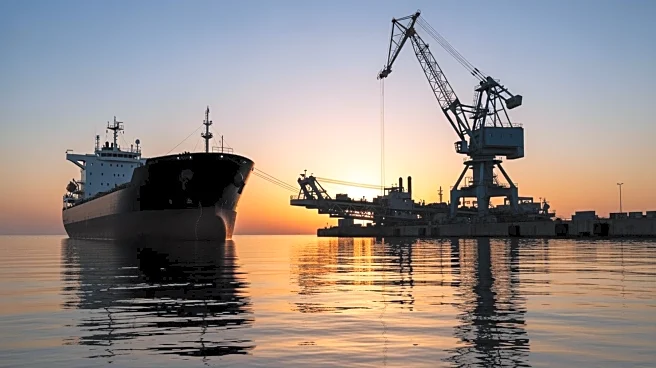
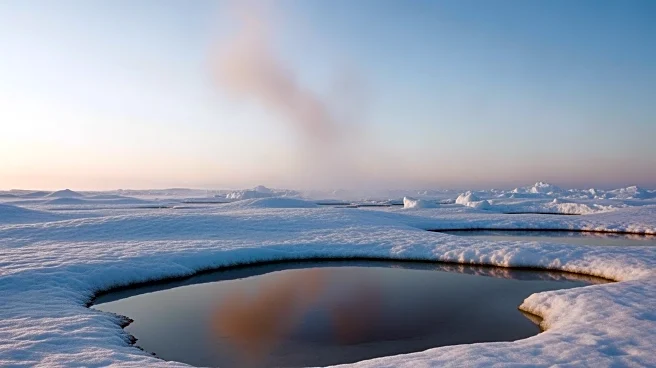
and ground-based instruments to analyze atmospheric chemistry in the Arctic. The findings revealed that openings in sea ice, known as leads, significantly affect atmospheric chemistry and cloud development. Additionally, pollution from oil field operations alters the regional atmosphere's composition. These factors together form a feedback loop that exacerbates sea ice loss and intensifies warming. The research, published in the Bulletin of the American Meteorological Society, highlights the complex interactions between sea-spray aerosols, surface-coupled clouds, and oil field emissions, which are reshaping the Arctic climate.
Why It's Important?
The discovery of this feedback loop is crucial as it provides insight into how human activities are influencing climate change in the Arctic, a region experiencing rapid environmental shifts. The findings suggest that pollution from oil fields and the resulting chemical reactions are not only affecting local climates but could also have broader implications for global climate patterns. The study's results are significant for climate modelers, offering new data to improve predictions of future climate scenarios. Understanding these processes is vital for developing strategies to mitigate the impacts of climate change, particularly in vulnerable polar regions.
What's Next?
The next phase of the CHACHA project will focus on creating detailed datasets to enhance climate models, helping scientists predict how Arctic processes might influence global climate patterns. Researchers will continue to study the chemical reactions in the Arctic environment, particularly the formation of smog plumes and their potential to reach pollution levels similar to urban areas. This ongoing research aims to provide a clearer picture of the Arctic's role in global climate dynamics and inform policy decisions on environmental protection and climate change mitigation.