





What's Happening?
Upper Darby, Pennsylvania, is set to introduce new legislation aimed at restricting collaboration and data-sharing with U.S. Immigration and Customs Enforcement (ICE). This move comes after the death of Upper Darby resident Parady La in ICE custody in January,
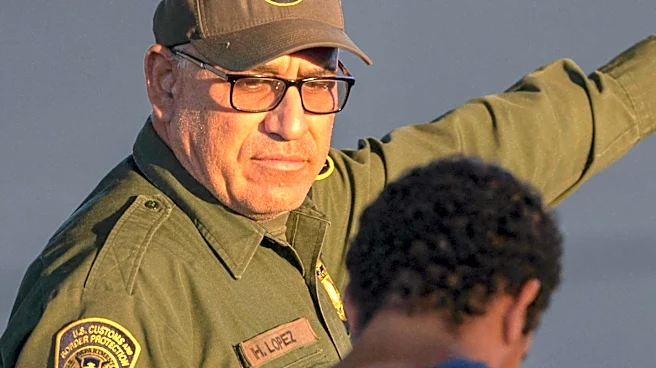
following his detention at the Philadelphia Federal Detention Center. Councilmember At-Large Kyle McIntyre, a lead sponsor of the bill, stated that La's death and hundreds of ICE arrests in the township this year spurred the Council to codify protections for immigrant residents. The proposed ordinance, described as one of the most advanced ICE protection bills outside of Philadelphia, seeks to establish clear rules governing Upper Darby's government and resources without interfering with federal authority. It is largely based on Philadelphia's 'ICE Out' legislation, passed in April, but includes specific provisions such as requesting federal agents to identify themselves and refrain from wearing face masks, and requiring Upper Darby Police to document and publicly share ICE activity.
Why It's Important?
This ordinance is important because it represents a significant local effort to address immigration enforcement at the municipal level, particularly in a township where nearly a quarter of the population is foreign-born. The death of Parady La in ICE custody has brought to the forefront concerns about the safety and rights of immigrant residents, making this a critical public safety issue for Upper Darby. By limiting local police cooperation with ICE and increasing transparency regarding ICE activities, the ordinance aims to build trust between immigrant communities and local law enforcement, encouraging residents to report crimes without fear of immigration consequences. This initiative could serve as a model for other municipalities grappling with similar issues, potentially influencing broader policy discussions on local-federal immigration enforcement relationships across the U.S. It also highlights the ongoing tension between federal immigration mandates and local jurisdictions' desire to protect their diverse populations.
What's Next?
The Upper Darby Council will introduce the legislation, initiating a process that will likely involve public hearings and debates before a final vote. If passed, the ordinance will establish new protocols for Upper Darby Police regarding interactions with federal immigration agents, including requirements for identification and documentation of ICE activities. The effectiveness of the ordinance will depend on its implementation and the reactions from both federal authorities and local community groups. Given that a similar Philadelphia ordinance banning face masks for law enforcement was challenged by the Trump administration and paused by a judge, Upper Darby's provisions regarding federal agent identification may face legal scrutiny. Community organizers and immigrant rights advocates will likely monitor the ordinance's enforcement closely, advocating for its full implementation and potentially pushing for further protections if deemed necessary. The outcome in Upper Darby could set a precedent for other municipalities considering similar measures.
Beyond the Headlines
The Upper Darby ordinance delves into the complex ethical and legal dimensions of immigration enforcement in the U.S., particularly the balance of power between federal and local authorities. The emphasis on local police identifying themselves and documenting ICE activities reflects a broader movement towards greater transparency and accountability in law enforcement, especially concerning vulnerable populations. The tragic death of Parady La underscores the human cost of current immigration policies and detention practices, prompting a re-evaluation of how local communities can safeguard their residents. This local legislative action also highlights the evolving role of municipalities in addressing national issues, often stepping in where federal policy is perceived as inadequate or harmful. The debate surrounding such ordinances touches upon fundamental questions of civil liberties, community trust, and the definition of public safety in diverse urban and suburban environments, potentially influencing future legal challenges and policy reforms at various governmental levels.