
What's Happening?
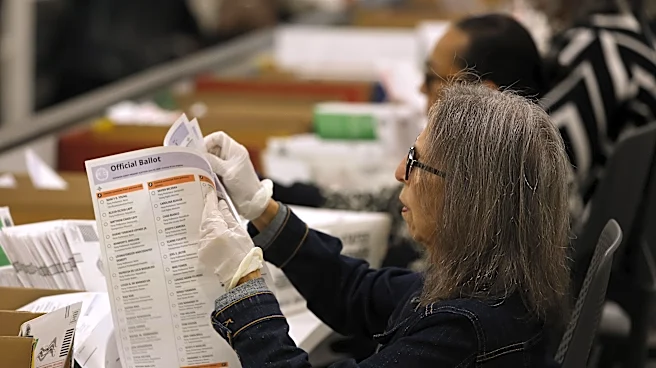
The Lancaster County Election Commission in Lincoln, Nebraska, has completed the tallying of 2,864 provisional ballots and resolutions, marking the official end of the 2026 midterm election cycle. Election Commissioner
Todd Wiltgen stated that provisional ballots are cast by voters who may not be registered in the precinct where they showed up, or who are new registrants. These ballots are crucial as every vote must be counted, even if they are unlikely to alter the outcomes of races with significant margins. Reasons for provisional ballots also include voters not having their identification card, adhering to Nebraska’s voter ID rule. The counting process involved a crew of volunteers working on Friday, November 13, 2026.
Why It's Important?
The completion of provisional ballot counting is a fundamental aspect of democratic processes, ensuring the integrity and accuracy of election results. Although these ballots may not change the overall outcome in races with large leads, their inclusion upholds the principle that every eligible vote matters. The process highlights the operational challenges and meticulous efforts involved in election administration, particularly concerning voter registration discrepancies and voter ID requirements. The report also noted a shift in voter behavior during this election, with a higher-than-anticipated turnout on Election Day itself (nearly 65%) compared to early voting (about 35%), which typically comprises a larger portion of total ballots cast in general elections. This change in voting patterns could influence future election strategies and resource allocation for election commissions.
What's Next?
With the provisional ballots tallied, the 2026 midterm election cycle in Lancaster County is officially concluded. The focus will now likely shift to post-election analyses, including detailed breakdowns of voter turnout and demographic data. Election officials and political strategists will review the trends observed, such as the increased Election Day voting, to inform future planning. This data could influence decisions regarding voter outreach, early voting accessibility, and the enforcement or modification of voter ID laws. The experience gained from this election cycle will be used to refine procedures for upcoming elections, ensuring continued efficiency and accuracy in the electoral process.
Beyond the Headlines
The meticulous process of counting provisional ballots underscores the broader commitment to electoral fairness and transparency in the U.S. It highlights the complexities of voter registration systems and the impact of voter ID laws on the voting experience. The shift in voting patterns, with more people choosing to vote on Election Day rather than early, could reflect evolving voter preferences or responses to specific campaign dynamics. This trend might also prompt discussions about the convenience and security of different voting methods. Furthermore, the dedication of volunteers in counting these ballots emphasizes the community involvement essential for a functioning democracy, ensuring that even votes cast under irregular circumstances are properly processed and accounted for.