


What's Happening?
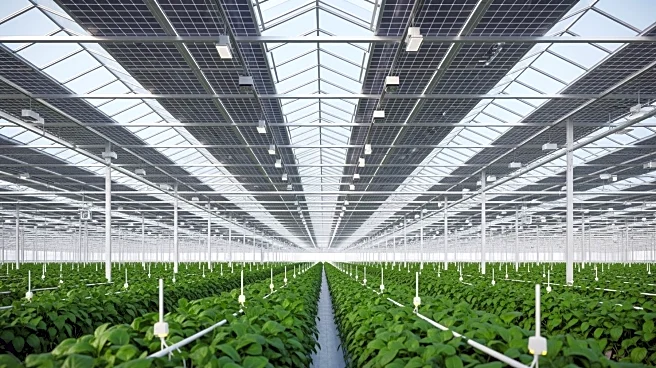
In Dingxi, Gansu province, China, smart greenhouses are being utilized for year-round agricultural cultivation, producing fresh fruits and vegetables. The city, located in the Loess Plateau, has adopted smart farming techniques, moving beyond traditional
weather-dependent practices. The Dingxi Potato Research Institute has automated the entire process of potato seed production, including fertilization, watering, and real-time growth monitoring. This institute produces 60 million virus-free potato seed test-tube seedlings annually, along with nearly 120 million seed potatoes, which are sold across China and exported to countries like Egypt and Saudi Arabia. The Gansu Province State Farm Group is also advancing new technologies and equipment, developing smart agriculture demonstration zones, and employing high-tech devices like driverless tractors and drones to enhance agricultural efficiency.
Why It's Important?
The adoption of smart agriculture in Gansu province represents a significant shift towards more efficient and sustainable farming practices. By integrating advanced technologies, the region is able to increase agricultural productivity and reduce dependency on traditional farming methods. This not only boosts local economies but also positions Gansu as a leader in agricultural innovation. The export of high-quality agricultural products, such as virus-free potato seeds, enhances China's trade relationships with countries like Egypt and Saudi Arabia. Furthermore, the development of smart agriculture supports rural vitalization by providing stable jobs and increasing incomes for local residents.
What's Next?
As Gansu continues to invest in agricultural technology, it is likely to see further improvements in crop yields and economic growth. The success of smart greenhouses and other high-tech farming methods could serve as a model for other regions in China and beyond, encouraging wider adoption of similar practices. Continued research and development in agricultural technologies will be crucial in addressing global food security challenges and adapting to climate change. The expansion of export markets for Gansu's agricultural products may also lead to increased international collaboration and trade opportunities.





