




What's Happening?
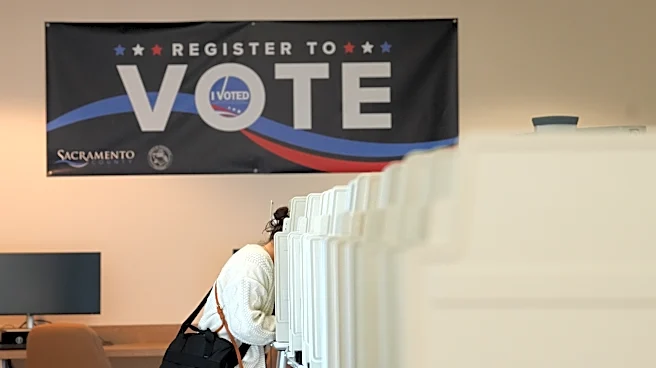
South Carolina has witnessed a significant increase in early voting participation for its 2026 primary elections. According to the South Carolina Election Commission, 318,602 people voted early, marking a substantial rise from the 120,178 early voters
in 2024 and 100,450 in 2022. This surge in early voting coincides with the state's gubernatorial race and reflects a growing trend since the introduction of true early voting in 2022. The Democratic primary saw higher participation, with 132,242 ballots cast compared to 74,809 in the Republican primary as of June 2. The state Democratic Party had encouraged early voting, aligning with the opening of polls on May 26, just before a Senate debate on congressional redistricting. The redistricting proposal, which could have affected the timing of U.S. House primaries, ultimately failed, ensuring the current election schedule remains unchanged.
Why It's Important?
The record-breaking early voting turnout in South Carolina highlights a shift in voter engagement and accessibility. This increase may influence future electoral strategies and policies, as political parties recognize the importance of early voting in mobilizing their bases. The Democratic Party's successful push for early participation could set a precedent for other states, potentially reshaping campaign strategies nationwide. Additionally, the failure of the redistricting proposal maintains the status quo, allowing voters' early selections to remain relevant. This development underscores the critical role of early voting in ensuring broader participation and could lead to further legislative efforts to expand voting access.
What's Next?
As South Carolina's primary election approaches on June 9, attention will turn to the final voter turnout and the impact of early voting on election outcomes. The state will continue to process absentee ballots, which must be returned by 7 p.m. on election day to be counted. The results of the primaries will provide insights into voter preferences and the effectiveness of early voting initiatives. Political analysts and parties will likely assess the implications of this turnout for future elections, potentially advocating for expanded early voting periods and accessibility measures across the U.S.