




What's Happening?
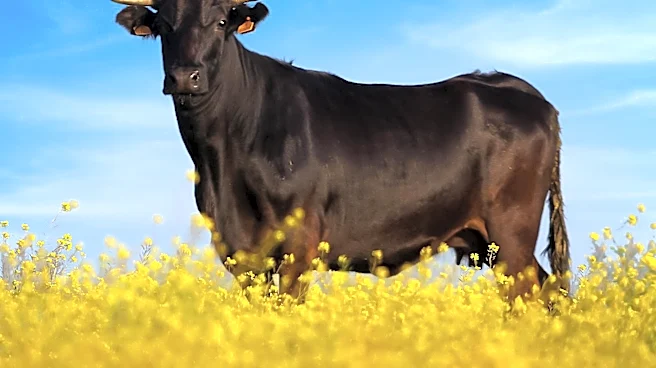
The United States will resume limited imports of Mexican cattle starting August 24, reopening a trade route that had been closed for over a year due to the spread of New World screwworm. This decision comes as U.S. cattle supplies have tightened, leading
to record-high beef prices. The phased plan requires Mexico to comply with joint pest-control measures, with each animal inspected by U.S. officials before entry. Mexican President Claudia Sheinbaum announced the decision, highlighting it as beneficial for Mexican ranchers. The initial exports will begin through Sonora, with plans to expand to Chihuahua, where recent screwworm cases were reported.
Why It's Important?
The resumption of cattle imports is significant for both Mexican ranchers and the U.S. beef industry. For Mexico, it provides an economic boost to ranchers affected by the previous trade halt. For the U.S., it offers relief to feedlots and meatpackers facing supply shortages, potentially stabilizing beef prices. The decision underscores the importance of cross-border cooperation in addressing agricultural and pest-control challenges. It also highlights the interconnectedness of the U.S. and Mexican economies, particularly in the agricultural sector.
What's Next?
As imports resume, both countries will need to maintain strict pest-control measures to prevent the spread of screwworm. The U.S. Department of Agriculture may pause trade if safeguards are not followed, indicating ongoing monitoring and potential adjustments. The reopening of additional ports in New Mexico will further facilitate trade, contingent on successful pest management. The situation may prompt further discussions on agricultural trade policies and pest-control strategies between the U.S. and Mexico.