




What's Happening?
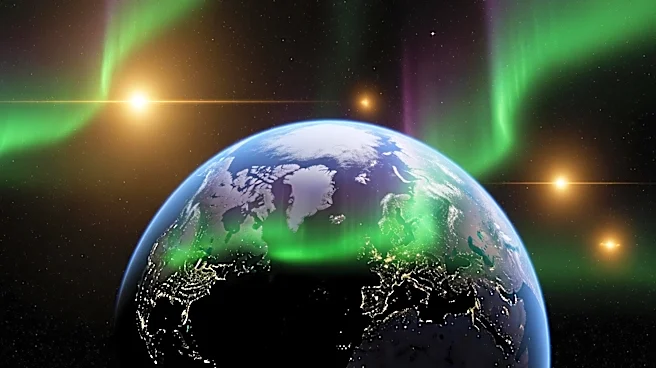
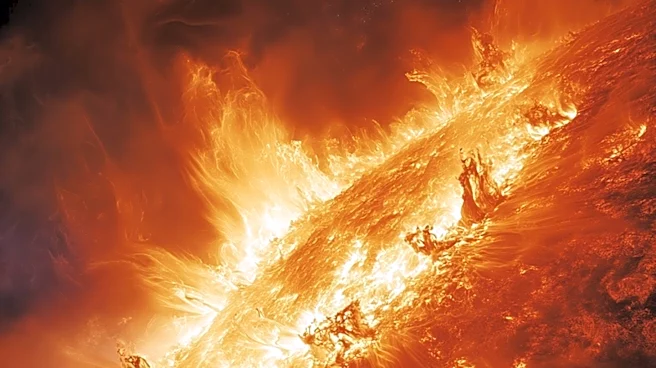
The National Oceanic and Atmospheric Administration (NOAA) has issued a strong G3 geomagnetic storm warning for June 4 to June 5, 2026, as multiple coronal mass ejections (CMEs) are expected to impact Earth. These CMEs, launched by a series of powerful
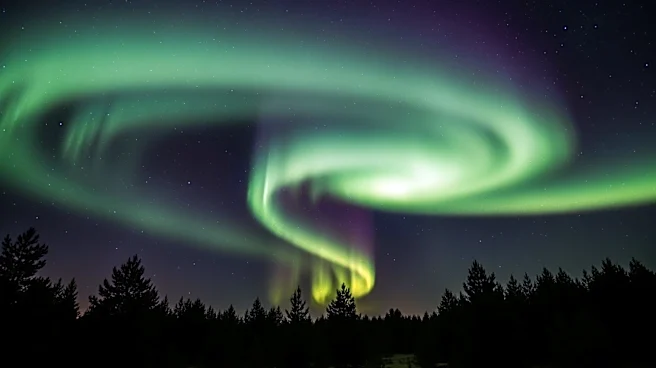
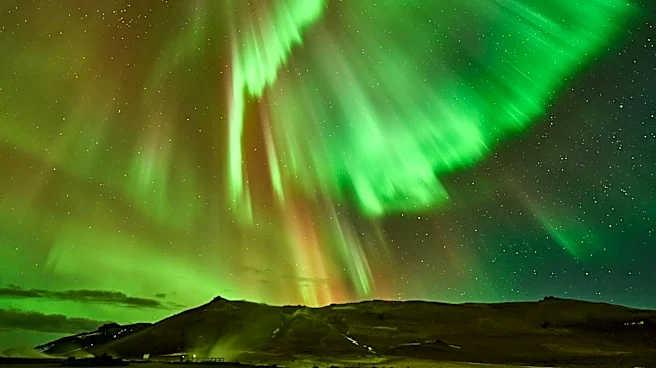
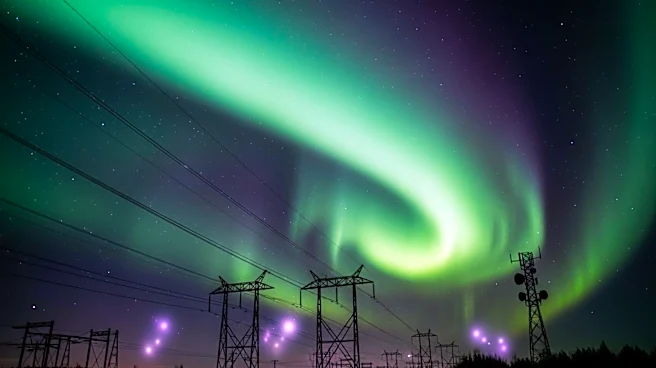
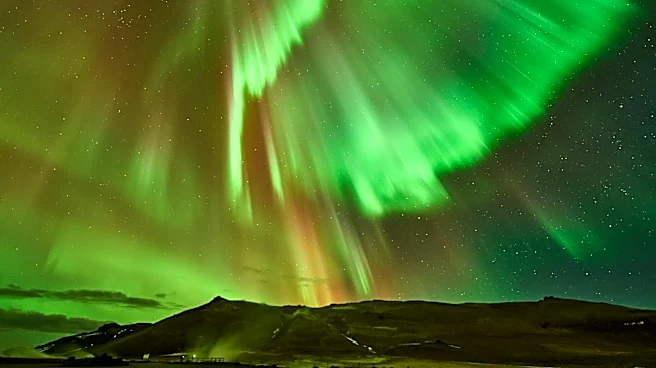
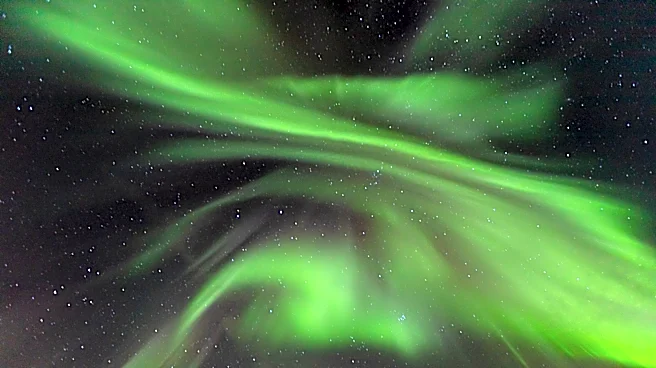
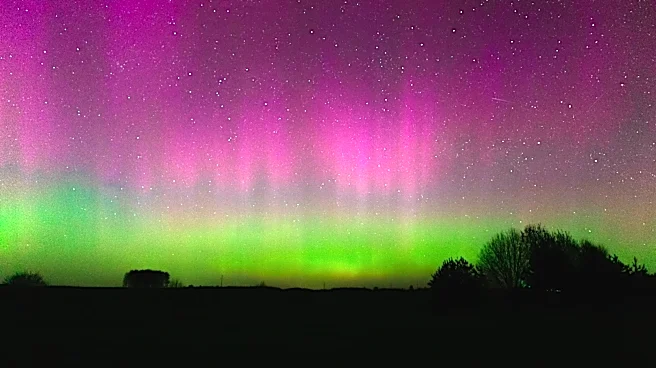
solar eruptions, may merge into a 'cannibal CME,' potentially intensifying the storm's effects. During such conditions, auroras, commonly known as the northern lights, could be visible as far south as Illinois and Oregon. The storm, classified as strong, could lead to voltage corrections in power systems, surface charging on satellite components, and intermittent satellite navigation and radio communication issues.
Why It's Important?
The G3 geomagnetic storm poses significant implications for various sectors in the U.S. Power systems may require adjustments to prevent disruptions, and satellite operations could face challenges due to increased drag and orientation issues. Communication systems, including radio and satellite navigation, might experience intermittent problems, affecting both civilian and military operations. The visibility of auroras in mid-latitudes highlights the storm's intensity, which could also impact public interest and awareness of space weather phenomena. The potential for widespread effects underscores the importance of monitoring and preparing for space weather events.
What's Next?
As the geomagnetic storm progresses, NOAA and other space weather agencies will continue to monitor the situation and provide updates. Power companies and satellite operators may implement precautionary measures to mitigate potential impacts. Public interest in the northern lights could increase, especially if they become visible in unexpected regions. The event may prompt discussions on the need for improved infrastructure resilience against space weather events. Additionally, scientific communities may use this opportunity to study the effects of CMEs on Earth's magnetosphere and related phenomena.