




What's Happening?
The Virginia Tech Carilion School of Medicine (VTCSOM) in Roanoke is set to expand significantly following a substantial state funding injection included in Virginia's latest biennial budget. The budget allocates $1.96 billion in capital expenditures
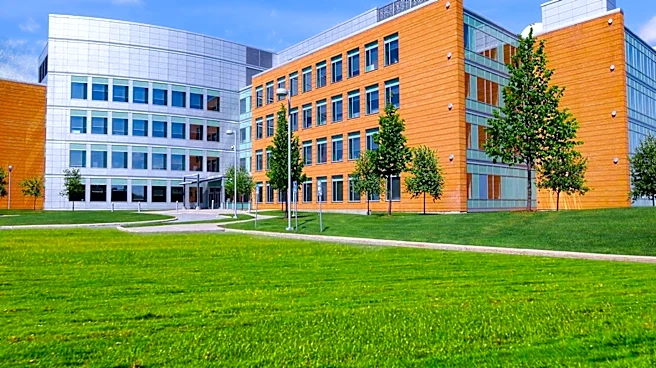
for state agencies and higher education, with a portion dedicated to VTCSOM. This funding will support the construction of a new medical school building and renovations to its current facility. Additionally, the budget includes $13 million over two years to support enrollment growth and reduce tuition for in-state students, addressing a long-standing issue where Virginia students paid the same tuition as out-of-state peers. The goal is to increase the medical school's student body from 222 to approximately 400, helping to address a national physician shortage and retain more doctors within Virginia. The budget also provides $14 million in operational support and equipment costs for the Virginia Tech Patient Research Center in Roanoke, which will focus on studying psychoses, and $250,000 for the Blue Ridge Partnership for Health Science Careers to explore establishing a regional public high school with a biomedical focus.
Why It's Important?
This state funding is a critical investment in Virginia's healthcare infrastructure and workforce development. By expanding the Virginia Tech Carilion School of Medicine, the state is directly addressing the national physician shortage, aiming to produce more medical professionals who are likely to practice within Virginia. The reduction in tuition for in-state students makes medical education more accessible and affordable, potentially encouraging more Virginians to pursue careers in medicine and remain in the state after graduation. The focus on the Virginia Tech Patient Research Center, particularly its work on psychoses, highlights a commitment to addressing urgent public health needs through specialized research. Furthermore, the exploration of a regional biomedical high school signifies a long-term strategy to cultivate a talent pipeline from an early age, ensuring a sustained supply of skilled individuals for the health sciences sector. This comprehensive approach not only enhances healthcare services but also stimulates economic growth by attracting research grants, biopharmaceutical investments, and creating jobs in the Roanoke area.
What's Next?
With the state funding secured, the Virginia Tech Carilion School of Medicine will proceed with the construction of its new building and the renovation of its existing facilities. The Virginia Tech Board of Visitors is expected to implement the plan for lowering VTCSOM tuition rates for in-state students, making medical education more accessible. The medical school will also begin increasing its student body towards the target of 400 students. The Virginia Tech Patient Research Center will utilize its $14 million in operational support and equipment costs to advance its research into psychoses. Concurrently, the Blue Ridge Partnership for Health Science Careers will use the $250,000 allocation to conduct a feasibility study for establishing a regional public high school with a biomedical focus, aiming to secure an early talent pipeline for the health sciences. These initiatives are expected to unfold over the next two years, aligning with the biennial budget cycle.
Beyond the Headlines
The investment in VTCSOM and related health science initiatives in Roanoke reflects a strategic vision for Virginia to become a leading hub in medical education, research, and innovation. This move goes beyond simply increasing the number of doctors; it aims to create a self-sustaining ecosystem for health sciences, from early education to advanced research and clinical practice. The focus on reducing in-state tuition also touches upon broader issues of educational equity and economic mobility, making high-demand professions more attainable for local residents. The emphasis on specialized research, such as psychoses, underscores the growing recognition of mental health as a critical public health concern requiring dedicated scientific inquiry. Moreover, the potential establishment of a biomedical high school could serve as a model for other states looking to cultivate specialized talent pools, fostering a new generation of scientists and healthcare professionals directly within their communities. This integrated approach could significantly impact the long-term health and economic landscape of the region.