

What's Happening?
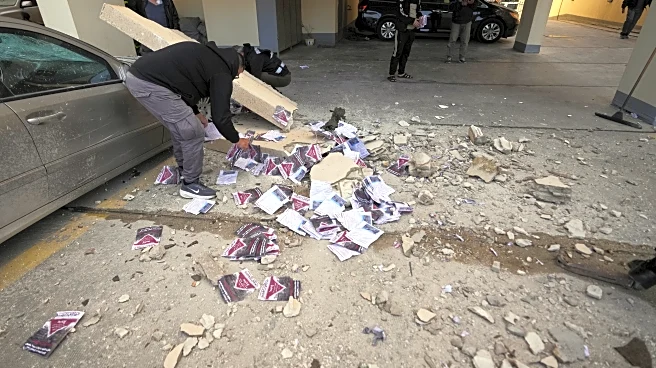
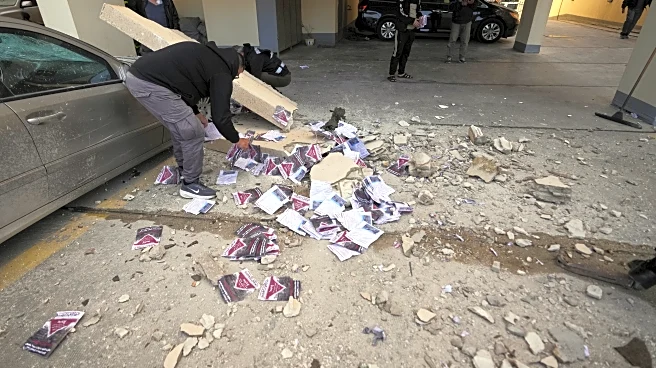
An Israeli airstrike in southern Lebanon has resulted in the deaths of three Lebanese journalists. The strike targeted a media vehicle, killing Ali Shaib, a reporter for Al Manar TV, Fatima Ftouni from Al Mayadeen, and her brother Mohammed, a cameraman.
The Israeli military claimed that Shaib was a member of a Hezbollah intelligence unit and accused him of inciting against Israeli soldiers and civilians. However, Hezbollah denied these allegations, stating that the claims were an attempt to evade responsibility for the attack. Lebanese President Joseph Aoun condemned the strike, describing it as a violation of international norms that protect journalists in conflict zones. The incident has raised concerns about the safety of media professionals in the region, with Reporters Without Borders highlighting the increasing risks faced by journalists.
Why It's Important?
The deaths of the journalists underscore the ongoing dangers faced by media professionals in conflict zones, particularly in the Middle East. This incident highlights the broader issue of press freedom and the protection of journalists, which are critical for ensuring transparency and accountability in conflict areas. The strike could further strain relations between Israel and Lebanon, potentially escalating tensions in the region. It also raises questions about the rules of engagement and the protection of civilians, including journalists, during military operations. The international community may respond with calls for investigations and increased measures to safeguard journalists working in dangerous environments.
What's Next?
The incident is likely to prompt international scrutiny and calls for accountability from human rights organizations and media advocacy groups. There may be demands for an independent investigation into the circumstances surrounding the airstrike and the deaths of the journalists. The Lebanese government, along with international bodies, could push for stronger protections for journalists in conflict zones. Additionally, the event may lead to increased diplomatic tensions between Israel and Lebanon, with potential repercussions for regional stability. Media organizations may also reassess their safety protocols for journalists operating in high-risk areas.
Beyond the Headlines
The airstrike and the resulting deaths of journalists highlight the ethical and legal challenges of military operations in populated areas. The incident raises questions about the balance between military objectives and the protection of non-combatants, including journalists. It also underscores the role of media in conflict zones, where journalists often face significant risks to provide critical information to the public. The situation may lead to discussions on international laws governing the conduct of war and the responsibilities of states to protect journalists. Long-term, this could influence policy changes aimed at enhancing the safety and security of media professionals worldwide.