






What's Happening?
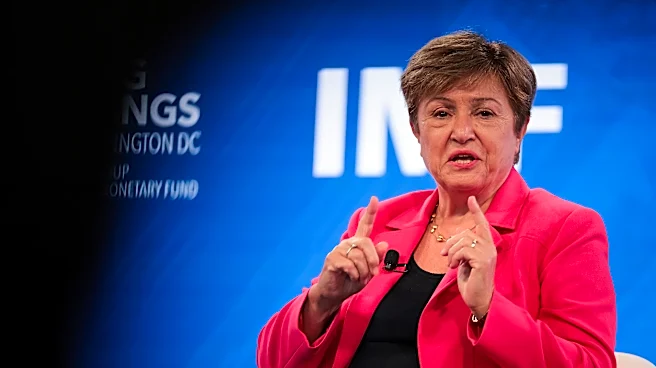
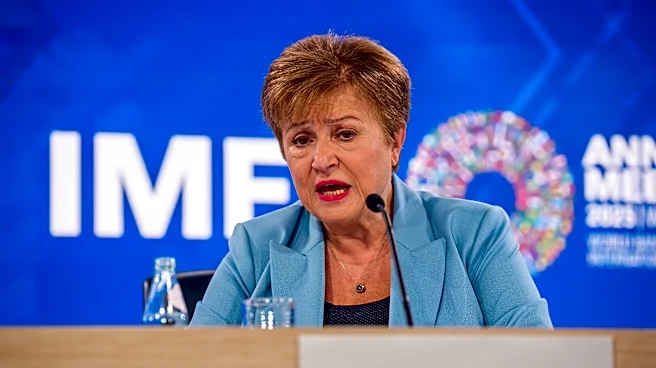
The International Monetary Fund (IMF) has stated that Senegal must fulfill several conditions before its board can approve a US$2.2 billion lending program. According to Julie Kozack, IMF communications director, these conditions include the completion
of a budget framework, corrective measures regarding Senegal's misreported debt, and financing assurances from its international partners. Senegal's parliament, the National Assembly, recently rejected the revised 2026 budget, creating a hurdle for the loan approval. The IMF emphasizes that the loan cannot proceed until the budget dispute in Dakar is resolved and the other conditions are met. The staff-level agreement for the 36-month Extended Credit Facility was reached on September 1, 2026, covering the period from 2026 to 2029.
Why It's Important?
For U.S. investors holding Senegalese debt, the IMF's conditions signal that the disbursement of the US$2.2 billion loan is not imminent. This delay could impact the perceived risk and stability of Senegal's financial markets. The IMF's insistence on fiscal transparency and a resolved budget framework highlights the importance of good governance and sound economic policies for international financial support. The situation also underscores the complexities of political dynamics within borrowing nations, where domestic legislative processes can directly affect international financial agreements. The resolution of these issues is crucial for Senegal to access much-needed funds, which could influence its economic trajectory and its ability to meet financial obligations, thereby affecting investor confidence.
What's Next?
Senegal's government will need to resolve the budget dispute with its National Assembly, potentially by resubmitting a revised budget bill or finding an alternative method for its adoption. The IMF will also be looking for concrete steps to address the misreported debt figures and secure financing assurances from Senegal's partners. Until these conditions are met, the IMF board will not set a date for approving the US$2.2 billion loan. Investors will be closely watching for any developments in the budget negotiations and the government's actions regarding debt transparency. The timeline for these actions remains uncertain, as the IMF has not provided a specific timetable for board approval.
Beyond the Headlines
The IMF's stance on Senegal's loan approval extends beyond mere financial conditions, touching upon broader principles of fiscal accountability and governance. The requirement to correct misreported debt data emphasizes the IMF's role in promoting transparency and accurate financial reporting among member states, which is critical for maintaining trust in international financial systems. The budget dispute also highlights the tension between national sovereignty and the conditionalities often attached to international aid, where domestic political processes can directly influence a country's access to global financial resources. This situation could serve as a precedent for how the IMF handles similar cases of fiscal and governance challenges in other developing nations, reinforcing its commitment to stringent financial oversight and policy adherence.