







What's Happening?
Moldova's parliament has approved a legislative initiative in its first reading to significantly ease foreign exchange limits, a move aimed at aligning the nation's financial regulations with European Union standards. The threshold for foreign currency
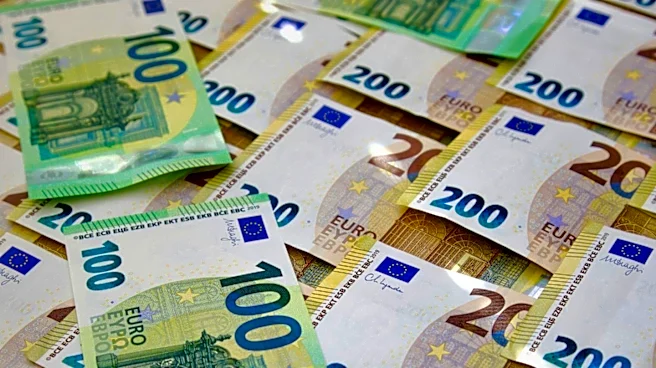
operations that are exempt from National Bank of Moldova (BNM) authorization will increase from €10,000 to €100,000. This change is part of a three-stage liberalization roadmap designed to ensure the full free movement of capital before Moldova's potential accession to the European Union. State Secretary of Finance Elena Grumeza emphasized that this reform aligns national law with EU single market principles, which strictly prohibit restrictions on capital movements among member states and with third countries. The expanded €100,000 threshold will become effective one month after its official publication. The updated regulations specifically cover capital outflows from Moldova, including the acquisition of foreign financial assets, cross-border loans, and loan guarantees issued to non-residents. Additionally, the legislation authorizes currency exchange bureaus to act as licensed payment service agents, subject to BNM approval, and lifts authorization requirements for Moldovans opening foreign bank accounts while abroad. It also permits foreign currency transactions at international airport terminals, on commercial flights, and at border crossings. The draft bill, developed by the central bank, is now awaiting a decisive second reading in parliament.
Why It's Important?
This legislative change is a critical step in Moldova's broader strategy for European Union integration, signaling a commitment to adopting EU economic and financial norms. By liberalizing foreign exchange limits, Moldova aims to foster a more open and integrated financial system, which is essential for attracting foreign investment and facilitating international trade. The move will reduce bureaucratic hurdles for businesses and individuals engaging in cross-border financial activities, potentially boosting economic growth and increasing financial transparency. For U.S. businesses and investors, a more financially integrated Moldova could present new opportunities for market entry and expansion, as reduced capital controls make it easier to conduct transactions and repatriate profits. The alignment with EU standards also provides a more predictable and stable regulatory environment, which is generally favorable for international business operations. Conversely, the increased competition from European firms in a more open Moldovan market could pose challenges for existing U.S. businesses if they are not prepared to adapt. The long-term impact hinges on Moldova's successful EU accession, which would further solidify its economic ties with the European bloc and potentially create a more robust and interconnected market.
What's Next?
The legislative initiative will proceed to a decisive second reading in Moldova's parliament. If approved, the expanded €100,000 threshold for foreign currency operations will take effect one month after its official publication. The transaction cap is further scheduled to rise to €250,000 starting January 1, 2028, as part of the ongoing three-stage liberalization roadmap. This phased approach indicates a deliberate and structured transition towards full capital movement liberalization, anticipating Moldova's eventual EU membership. The National Bank of Moldova will likely issue further guidelines and regulations to implement these changes, and currency exchange bureaus will need to seek BNM approval to operate as licensed payment service agents. International financial institutions and foreign investors will closely monitor these developments, as the successful implementation of these reforms will be a key indicator of Moldova's readiness for deeper economic integration with the EU. The government will also continue its efforts to align other national legislation with the EU acquis, including in areas such as innovation infrastructure and science and technology parks, as part of its broader EU integration agenda.
Beyond the Headlines
The easing of foreign exchange limits in Moldova extends beyond mere financial regulation; it represents a profound shift in the nation's economic philosophy and geopolitical orientation. This move is a clear signal of Moldova's unwavering commitment to its European path, distancing itself from historical ties and aligning with Western economic principles. The liberalization of capital movements is not just about economic efficiency; it's about fostering trust and transparency, which are foundational to a market economy integrated with the EU. Ethically, this could lead to greater accountability in financial transactions, reducing opportunities for illicit financial flows, though robust oversight will be crucial. Culturally, increased financial interaction with Europe could accelerate the adoption of European business practices and norms, influencing everything from corporate governance to consumer expectations. The long-term shift could see Moldova's economy becoming inextricably linked with the EU, potentially leading to a brain drain if opportunities within the EU become more attractive, or conversely, attracting skilled labor and investment if Moldova successfully leverages its integration. This policy is a testament to the idea that economic reforms are often intertwined with broader societal and political transformations, aiming to secure a future within the European sphere of influence.