





What's Happening?
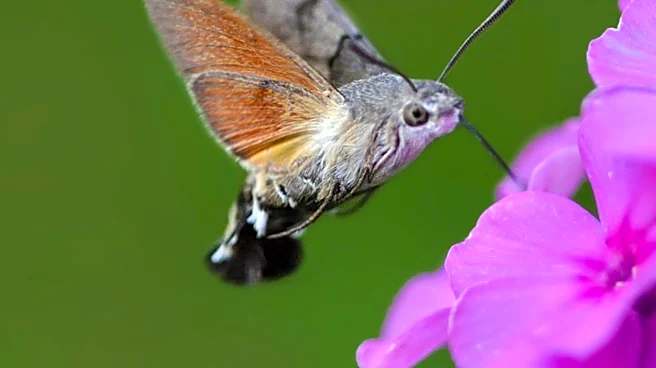
Hummingbird hawk-moths are being increasingly observed in British gardens this summer, suggesting a potential rise in valuable migrant insects. These moths, which hover over flowers in a birdlike manner, are typically migrants from mainland Europe and North
Africa. The increase in sightings has been attributed to recent hot weather and strong southerly winds, which may have facilitated their movement northward. Experts from Butterfly Conservation have noted a significant rise in public reports and inquiries about these moths, indicating that 2026 could be a notable year for their presence in the UK.
Why It's Important?
The influx of hummingbird hawk-moths may reflect broader environmental changes, including global shifts in weather patterns linked to human activity. As global temperatures rise, the habitats and migratory patterns of various species, including insects, are changing. This could lead to long-term ecological shifts, with the UK potentially becoming a more hospitable environment for species traditionally seen as seasonal migrants. The presence of these moths could also impact local ecosystems, as they may become more permanent residents if milder winters allow them to survive and reproduce.
What's Next?
Experts are continuing to monitor the situation through public reports and inquiries. Gardeners are encouraged to maintain wildlife-friendly spaces to support these and other species. The ongoing documentation of these moths' presence will help conservationists understand the broader ecological impacts and inform future environmental strategies.