






What's Happening?
The United States and the Democratic Republic of Congo (DRC) held their second joint steering committee meeting in Paris on November 5. This committee coordinates a strategic partnership focused on critical minerals, infrastructure, and security. Key
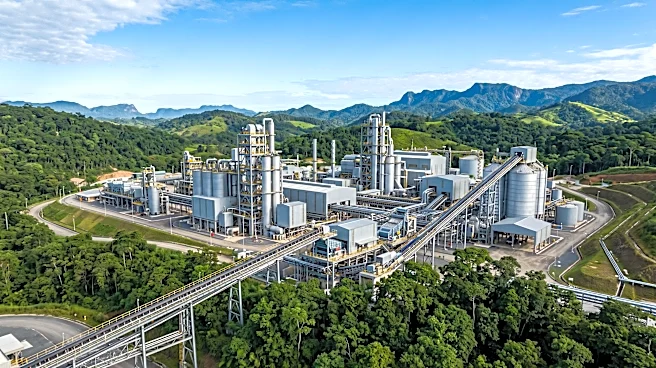
discussions included the Lobito railway corridor, which connects the DRC's copper belt to the Atlantic port of Lobito in Angola, and the Grand Inga hydropower complex. The parties also addressed the development of raw material processing within the DRC and the establishment of a strategic asset reserve, which would grant U.S. companies priority access to a list of Congolese assets. The partnership, initiated with an agreement signed on December 4, 2025, aims to enhance cooperation in these vital sectors. The U.S. Development Finance Corporation provided updates on potential investments in the DRC, though specific amounts were not disclosed. The joint statement emphasized the importance of peace and security in eastern DRC for the successful implementation of the partnership.
Why It's Important?
This strategic partnership is crucial for the U.S. to secure access to critical minerals, such as cobalt, which are essential for electric vehicles, renewable energy technologies, and other advanced manufacturing. The DRC is a major global supplier of cobalt, accounting for approximately three-quarters of global production in 2025. By fostering this partnership, the U.S. aims to diversify its supply chains and reduce reliance on other nations for these vital resources, thereby enhancing its economic and national security. The focus on infrastructure projects like the Lobito Corridor and Grand Inga also signifies an effort to improve the efficiency of mineral extraction and processing, which could lead to more stable and cost-effective supply for U.S. industries. Furthermore, developing raw material processing within the DRC could create economic opportunities and stability in the region, aligning with broader U.S. foreign policy goals of promoting sustainable development and reducing conflict in resource-rich areas.
What's Next?
The joint steering committee will continue to coordinate the strategic partnership, with ongoing efforts to develop raw material processing capabilities and professional training for personnel in the DRC. The U.S. private sector has shown interest in the strategic asset reserve mechanism, indicating potential future investments and collaborations. While the joint statement did not specify investment amounts or project timelines, the continued engagement suggests further concrete steps are anticipated. The parties will also focus on ensuring peace and security in eastern DRC, which is deemed fundamental for the partnership's success. Future meetings and announcements are expected to provide more details on the implementation of projects and the overall progress of this strategic alliance.
Beyond the Headlines
The partnership between the U.S. and the DRC extends beyond mere resource acquisition; it represents a broader geopolitical strategy to counter the influence of other global powers in Africa's critical minerals sector. By investing in infrastructure and processing capabilities within the DRC, the U.S. is not only securing its supply chain but also promoting a more equitable distribution of value from these resources, potentially mitigating historical grievances about raw material extraction without local benefit. This approach could set a precedent for future engagements with resource-rich nations, emphasizing sustainable development and local empowerment. The focus on security in eastern DRC also highlights the complex interplay between resource wealth, governance, and regional stability, underscoring the ethical and legal dimensions of critical mineral sourcing in conflict-affected areas.