




What's Happening?
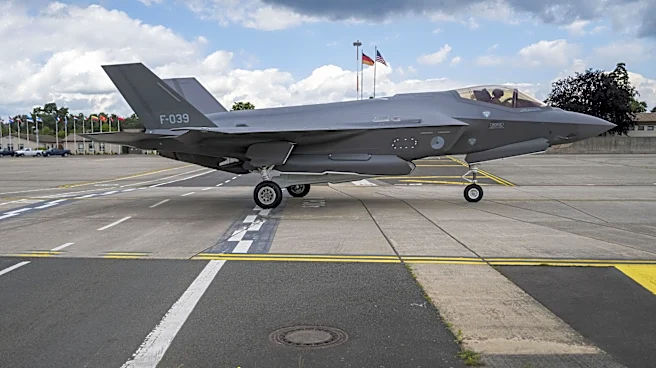
A study by the NATO Energy Security Centre of Excellence indicates a potential severe aviation fuel shortage for NATO by 2035 if a major European war were to occur. The report projects a shortfall of up to 4.7 million tonnes of aviation kerosene by 2035,
potentially escalating to nearly 50 million tonnes by 2050 under a worst-case scenario. This deficit could persist even if all civilian aviation fuel supplies were diverted to military use. The study attributes this risk to Europe's energy transition, which is leading to a reduction in oil refining capacity as demand for road transport fuels decreases. Since 2015, European NATO members have experienced a 16% loss in oil refineries and already rely on imports for a portion of their aviation fuel needs. The most significant problems are anticipated during a conflict involving the activation of Article 5, requiring a large-scale deployment of North American forces to Europe.
Why It's Important?
This projected jet fuel shortfall poses a critical threat to NATO's military readiness and operational capabilities, particularly for the United States and other North American forces that would be deployed to Europe in a major conflict. The reliance on a shrinking European refining capacity for aviation fuel highlights a significant vulnerability in the alliance's logistics and supply chain. The study underscores a tension between climate policy and defense planning, as decarbonization efforts, while environmentally beneficial, are inadvertently impacting the infrastructure necessary for military operations. The potential diversion of civilian fuel supplies to the armed forces in a crisis would also have severe implications for civil and business aviation, disrupting travel and commerce. This situation could force a reevaluation of energy security strategies within NATO, potentially leading to increased investment in alternative fuel production and diversification of import sources.
What's Next?
The study recommends protective and structural measures to address the impending jet fuel shortage. These include safeguarding strategically important refineries, enlarging existing reserves, expanding alternative fuel production, and diversifying import sources. For civil and business aviation, the study serves as a reminder that jet fuel availability is a shared infrastructure concern, implying that governments may prioritize military needs over civilian ones during a mobilization scenario. The findings suggest that policy decisions regarding sustainable aviation fuel (SAF) production could gain additional urgency, as scaling SAF capacity would serve both environmental and security objectives. NATO members will likely need to consider these recommendations in their long-term defense planning and energy policies to mitigate the identified risks.
Beyond the Headlines
The implications of this study extend beyond immediate military readiness, touching upon the broader ethical and economic considerations of balancing environmental goals with national security imperatives. The shrinking refining capacity in Europe, driven by decarbonization, illustrates a complex challenge where well-intentioned climate policies can have unforeseen consequences for defense capabilities. This situation could lead to debates about the optimal pace and methods of energy transition, especially concerning critical infrastructure. Furthermore, the potential for civilian fuel diversion in a crisis raises questions about societal resilience and the role of private industry in national defense. The study highlights the interconnectedness of energy, environment, and security, suggesting that future policy-making will require a more integrated approach to address these multifaceted challenges.