


What's Happening?
In Switzerland's Onsernone Valley, a unique architectural project has emerged as a solution to stringent local building regulations. A Swiss artist and climate activist, facing restrictions on traditional home extensions, collaborated with architect Olin
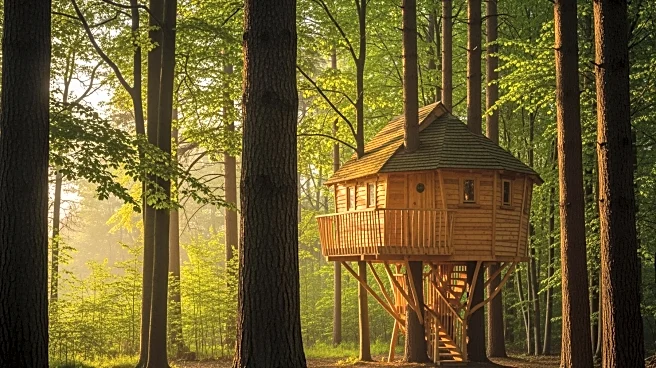
Petzold to create a treehouse studio. This innovative structure, known as Casetta Tessino, is anchored to three trees and features a triangular design that rises from the forest floor. The exterior is crafted from wood and translucent polycarbonate panels, allowing natural light to filter into the interior. The treehouse serves multiple functions, including a writing studio, guest room, and personal retreat, located approximately 150 meters from the main house. The design draws inspiration from Henry David Thoreau's philosophy of simple living and nature immersion, emphasizing contemplation and creativity over conventional comfort.
Why It's Important?
This project highlights the potential for creative architectural solutions in the face of regulatory and environmental constraints. By utilizing a treehouse design, the artist and architect circumvented the need for traditional foundations, which were prohibited by local regulations. This approach not only respects the natural landscape but also offers a model for sustainable and minimalist living. The treehouse's construction, completed by the client themselves, underscores the feasibility of self-built projects in remote locations. This development could inspire similar initiatives, promoting eco-friendly architecture and self-sufficiency. Additionally, the treehouse's availability to other creatives fosters a community of shared experiences and experimentation, challenging conventional architectural norms and lifestyle expectations.
What's Next?
The Casetta Tessino project may influence future architectural designs, particularly in areas with strict building regulations or environmental concerns. As more creatives and architects explore similar solutions, there could be a shift towards minimalist and sustainable living spaces that prioritize harmony with nature. The treehouse's success might encourage regulatory bodies to consider more flexible guidelines that accommodate innovative designs. Furthermore, the ongoing use of the space by various creatives will continue to test and refine the relationship between design, daily life, and creative practice, potentially leading to new insights and advancements in architectural design.
Beyond the Headlines
The Casetta Tessino project raises important questions about the balance between human habitation and environmental preservation. By building upwards and integrating with the forest, the project minimizes its ecological footprint while providing a functional living space. This approach challenges traditional notions of homebuilding and could lead to broader discussions about sustainable development and land use. The project's emphasis on self-building and simplicity also reflects a growing cultural shift towards valuing experiences and creativity over material possessions. As more people seek meaningful connections with nature, projects like Casetta Tessino may become increasingly relevant, offering a blueprint for living lightly and deliberately.