








What's Happening?
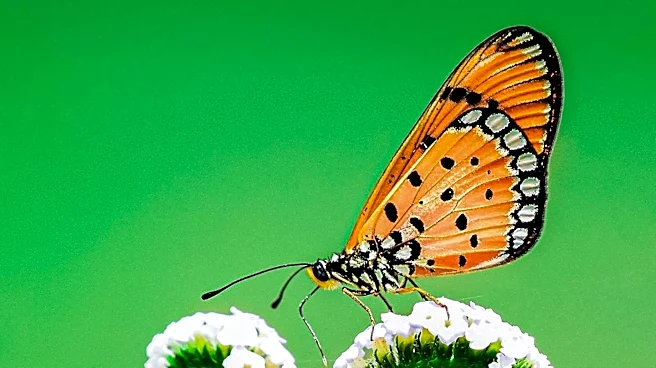
Researchers from the University of Bristol have discovered that certain species of Heliconius butterflies, native to Central and South American rainforests, live significantly longer than other butterflies. Heliconius hewitsoni, for example, can live up
to 348 days, compared to the 14-day lifespan of its relative, Dione juno. The study, conducted in collaboration with the Smithsonian Tropical Research Institute, found that these butterflies also show minimal signs of aging. Unlike most butterflies that feed on nectar, Heliconius species consume pollen, which is rich in proteins and amino acids. However, even without pollen, these butterflies outlive their relatives, suggesting that their longevity may be due to inherent biological factors.
Why It's Important?
The findings offer valuable insights into the biology of aging and longevity. Understanding why Heliconius butterflies age slower could provide clues about the mechanisms of aging, potentially informing research on human aging and longevity. The study also highlights the ecological diversity and adaptability of insects, which could have broader implications for biodiversity conservation and ecological studies. The research underscores the importance of preserving rainforest habitats, which are home to these unique species.
Beyond the Headlines
The study of Heliconius butterflies presents a natural experiment in longevity, offering a rare opportunity to compare closely related species with vastly different lifespans. This could lead to breakthroughs in understanding genetic and environmental factors that influence aging. Additionally, the research may inspire further studies on the role of diet and nutrition in longevity, with potential applications in human health and wellness.