



What's Happening?
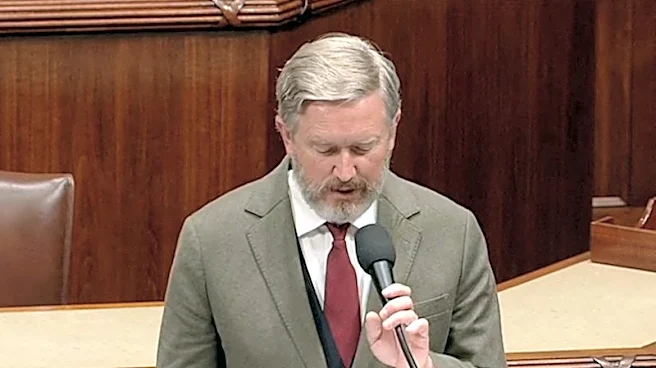
U.S. Representative Maxwell Frost, a Democrat, is championing legislation aimed at bolstering the arts and culture sector in the United States. During a panel discussion at the Congressional Black Caucus Foundation’s legislative conference in Washington,
Frost, a former band manager, conversed with super producers Jimmy Jam and Terry Lewis about the importance of music and the arts. Frost highlighted that the arts are the U.S.'s greatest export but are under-resourced. He has filed the Cultivating Resources for Emerging Artists to Thrive and Excel in Art (CREATE Art) Act (HR 7918), which proposes four grant programs for artists, including support for instruments and studio time. Additionally, Frost is developing another bill to establish a Secretary of Art and Culture within the federal government, a role he believes is missing in the U.S. compared to many other nations.
Why It's Important?
Representative Frost's advocacy underscores the economic and cultural significance of the arts in the U.S. The CREATE Art Act aims to provide crucial financial support to emerging artists, addressing a long-standing challenge of underfunding in the creative sector. This initiative could stimulate economic growth within the arts industry, create jobs, and foster innovation. The proposal for a Secretary of Art and Culture signifies a potential elevation of the arts to a cabinet-level priority, which could lead to more cohesive national cultural policies, increased international cultural diplomacy, and greater recognition of artists' contributions to society. Such a position could also help streamline federal support for cultural institutions and programs, ensuring that the U.S. maintains its global leadership in creative expression. The discussion with prominent producers like Jimmy Jam and Terry Lewis lends significant weight to the argument for increased investment in the arts.
What's Next?
The CREATE Art Act (HR 7918) currently lacks Republican co-sponsors and has not yet been heard by any committees. Representative Frost hopes that if Democrats gain control of the House in November, the bill will have a greater chance of advancement, potentially with the support of House Democratic Leader Hakeem Jeffries. Concurrently, Frost plans to roll out his bill to create a Secretary of Art and Culture within the next couple of years, indicating a long-term legislative strategy. The success of these initiatives will depend on political will, bipartisan cooperation, and continued advocacy from the arts community. If passed, these bills could lead to significant structural changes in how the U.S. government supports and promotes its cultural sector, potentially impacting artists, cultural institutions, and the nation's global cultural standing.
Beyond the Headlines
The push for greater federal support for the arts and the creation of a Secretary of Art and Culture delves into deeper philosophical questions about the role of government in fostering creativity and national identity. Beyond economic benefits, the arts are vital for social cohesion, critical thinking, and emotional well-being. A dedicated cabinet-level position could symbolize a national commitment to these values, influencing educational curricula, public programming, and international relations. Ethically, it raises questions about equitable access to artistic opportunities and the representation of diverse cultural voices. The absence of such a role, as noted by Jimmy Jam, highlights a potential gap in how the U.S. projects its cultural influence globally. This initiative could spark a broader cultural conversation about the intrinsic value of artistic expression and its essential place in a thriving democracy, moving beyond a purely economic justification for arts funding.