



What's Happening?
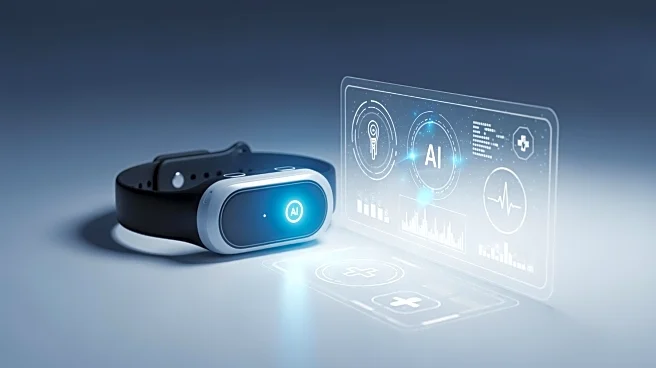
Artificial intelligence and wearable technology are driving a new era of medical self-testing, as demonstrated at the recent Consumer Electronics Show in Las Vegas. Devices such as smartwatches, rings, and bracelets are increasingly capable of monitoring
vital health metrics like heart rate, blood pressure, and glucose levels. Companies like Neurable are developing headsets that use electroencephalogram (EEG) technology to detect early signs of neurological conditions such as Alzheimer's disease. These advancements are part of a broader trend towards preventive medicine, where AI-powered devices can alert users to potential health issues before symptoms become apparent. The integration of AI with wearable technology is making self-testing more accessible and convenient for consumers.
Why It's Important?
The integration of AI with wearable devices represents a significant shift in healthcare, emphasizing preventive medicine and early detection of diseases. By enabling continuous monitoring of health metrics, these technologies can potentially reduce the need for frequent doctor visits and allow individuals to manage their health more proactively. This shift could lead to earlier interventions and better health outcomes, particularly for chronic conditions that benefit from early detection. The widespread adoption of these technologies could also alleviate some of the burdens on healthcare systems by reducing the frequency of in-person consultations and hospital visits.
What's Next?
As AI and wearable technologies continue to evolve, further advancements are expected in the accuracy and reliability of self-testing devices. Companies are likely to focus on expanding the range of detectable conditions and improving user interfaces to enhance accessibility. Regulatory bodies, such as the US Food and Drug Administration, will play a crucial role in ensuring the safety and efficacy of these devices. Additionally, ongoing research will explore the potential of these technologies in various medical fields, including mental health and chronic disease management. The continued development of AI-driven self-testing devices could transform healthcare delivery and patient engagement.