




What's Happening?
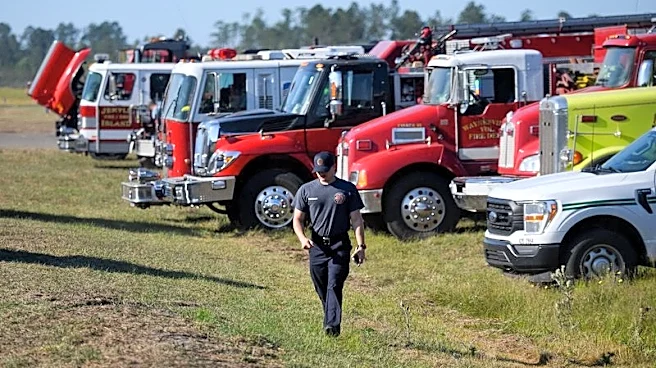
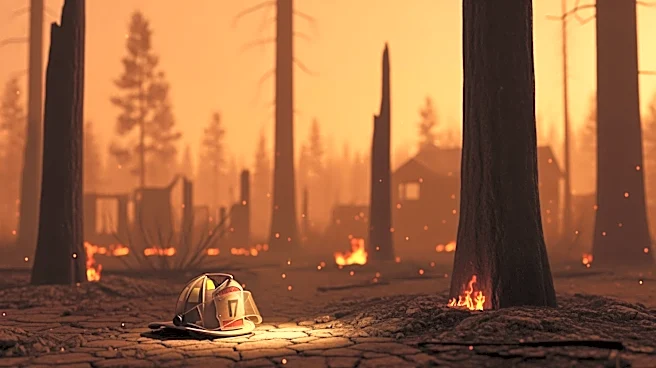
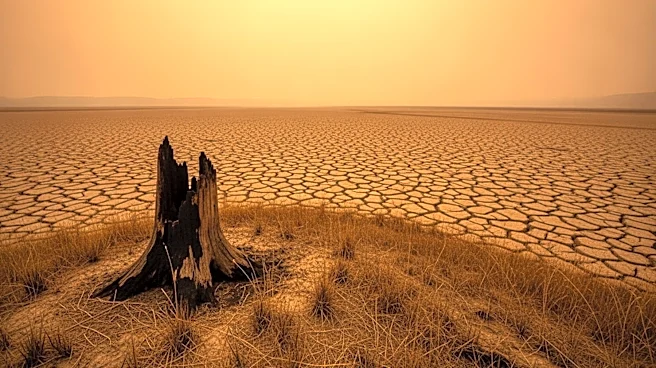
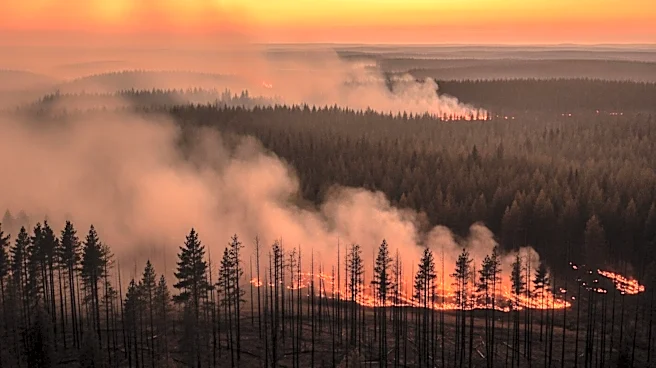
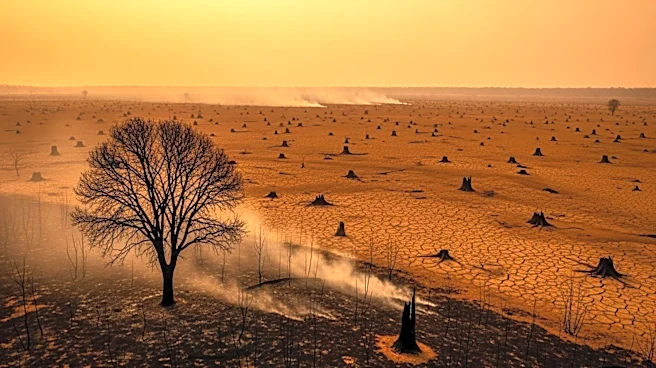
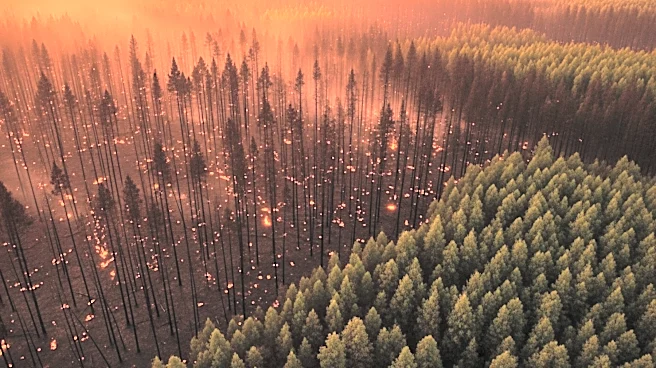
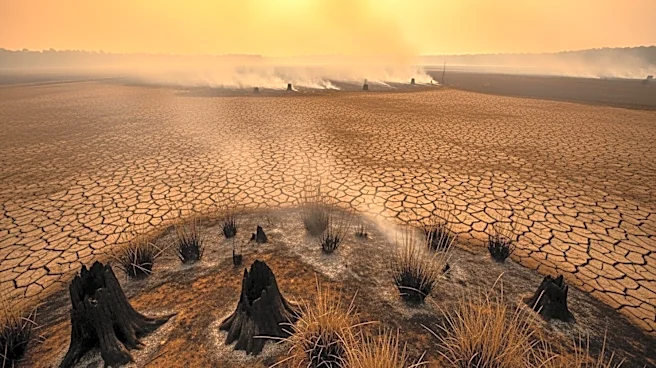
Two massive wildfires in south Georgia have destroyed more than 120 homes and scorched over 40,000 acres. The fires, exacerbated by extreme drought conditions, have turned the region into a tinderbox, allowing flames to spread rapidly. The Brantley Highway
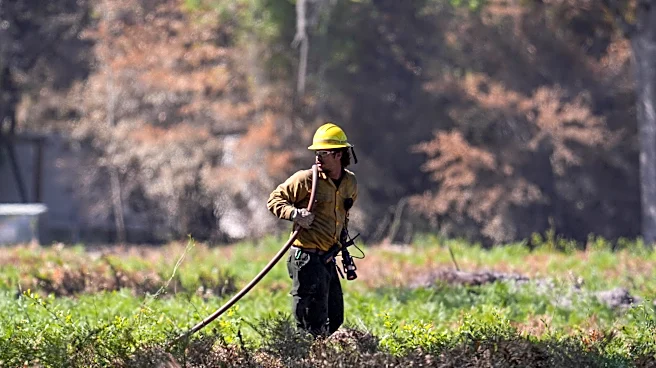
82 Fire, which began when a party balloon landed on a power line, has been burning since Monday and is considered the most destructive wildfire in Georgia's history. Meanwhile, the Pineland Road Fire, sparked by a welding operation, has also caused significant damage. Georgia Governor Brian Kemp has described these fires as the most dangerous and problematic in the country. Firefighters are battling over 150 other wildfires in Georgia and Florida, with smoke affecting air quality in distant areas.
Why It's Important?
The wildfires in Georgia highlight the severe impact of climate conditions on fire management and public safety. The destruction of homes and businesses underscores the vulnerability of communities to natural disasters, particularly in regions experiencing extreme weather patterns. The fires have prompted evacuations and raised concerns about the adequacy of emergency response and insurance coverage for affected residents. The situation also emphasizes the need for effective land management and disaster preparedness strategies to mitigate the risks associated with such catastrophic events. The economic and social implications are significant, as residents face the loss of property and livelihoods, while state resources are stretched thin in response efforts.
What's Next?
Efforts to contain the wildfires are ongoing, with firefighters working tirelessly to prevent further spread. Governor Kemp has toured the affected areas and met with first responders to assess the situation. The state is likely to seek federal assistance to support recovery and rebuilding efforts. In the coming days, weather conditions will play a crucial role in determining the success of containment strategies. Authorities are urging residents to comply with evacuation orders and stay informed about fire developments. The broader implications for fire management policies and climate adaptation strategies may also be revisited in light of these events.