





What's Happening?
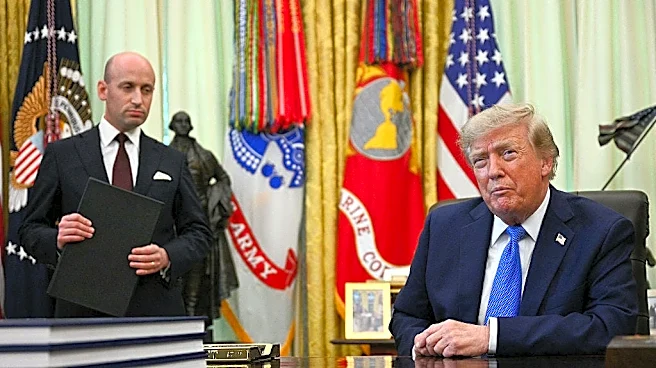
In a White House meeting in September 2025, Safra Catz, the executive chairman of Oracle Corporation, commended President Trump for his pro-business and pro-innovation policies. Catz stated that Trump's administration had 'liberated American innovation and creativity,'
enabling the U.S. to succeed. This meeting also included Sam Altman, CEO of OpenAI, who echoed similar sentiments about the administration's business-friendly approach. The discussion highlighted the influence of wealthy individuals in the Trump administration, with some billionaires holding significant positions within the government.
Why It's Important?
The involvement of billionaires in the Trump administration raises questions about the influence of wealth on political power in the U.S. The concentration of economic power within the government could potentially skew public policy in favor of the wealthy, impacting democratic integrity. This development is significant as it reflects a shift towards a governance model where economic elites have direct access to political decision-making, potentially affecting regulatory and economic policies that could favor large corporations over smaller businesses and the general public.
What's Next?
The ongoing influence of wealthy individuals in the government may lead to further deregulation and policies that favor large corporations. This could result in increased scrutiny and debate over the role of money in politics, especially as the U.S. approaches future elections. Political leaders and civil society groups may push for reforms to address the balance of power and ensure that democratic processes are not undermined by economic interests.
Beyond the Headlines
The trend of economic elites gaining political influence could lead to long-term shifts in U.S. governance, potentially affecting the country's socio-economic landscape. This development may also spark discussions on ethical governance and the need for transparency in political appointments and decision-making processes. The role of technology leaders in shaping policy, particularly in areas like artificial intelligence, could have profound implications for innovation and regulatory frameworks.