

What's Happening?
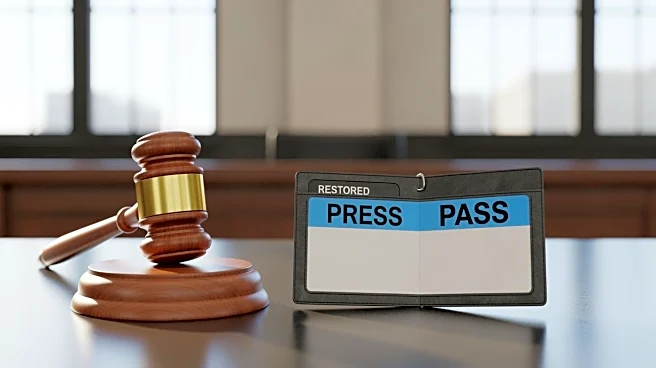
The Pentagon has announced plans to remove media offices from its building after a federal judge ruled against certain restrictions on reporters. U.S. District Judge Paul Friedman sided with The New York Times, ordering the reinstatement of press credentials
for seven journalists and striking down policies that were deemed to discriminate against 'disfavored journalists.' The Pentagon's policy, which required journalists to adhere to new restrictions to maintain access, was found to violate the First Amendment. Despite the ruling, the Pentagon plans to appeal and will implement new rules requiring journalists to be escorted within the building.
Why It's Important?
This development highlights ongoing tensions between the U.S. government and the press regarding access and freedom of speech. The Pentagon's decision to remove media offices could impact how military affairs are reported, potentially limiting transparency. The ruling underscores the judiciary's role in upholding constitutional rights against perceived governmental overreach. The outcome of the Pentagon's appeal could set a precedent for how press freedoms are balanced with national security concerns.
What's Next?
The Pentagon's appeal against the ruling will be closely watched, as it could influence future policies on media access to government facilities. Journalists and media organizations are likely to continue advocating for unrestricted access, emphasizing the importance of press freedom in democratic societies. The outcome may also prompt other government agencies to reassess their media policies to avoid similar legal challenges.