



What's Happening?
Japan's Martian Moons eXploration (MMX) spacecraft is set to embark on a mission to Phobos, one of Mars's moons, with the goal of collecting over 10 grams of material and returning it to Earth in Australia by 2031. This would mark the first time a sample
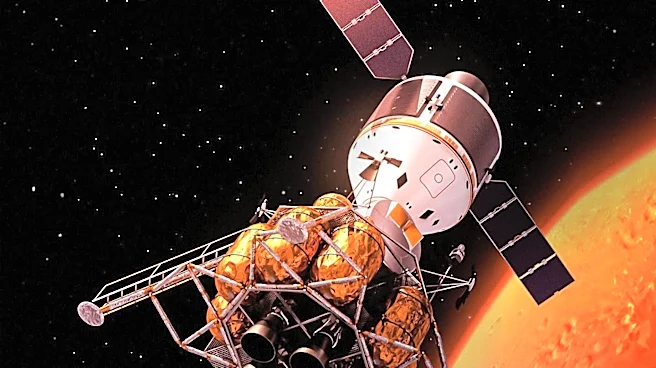
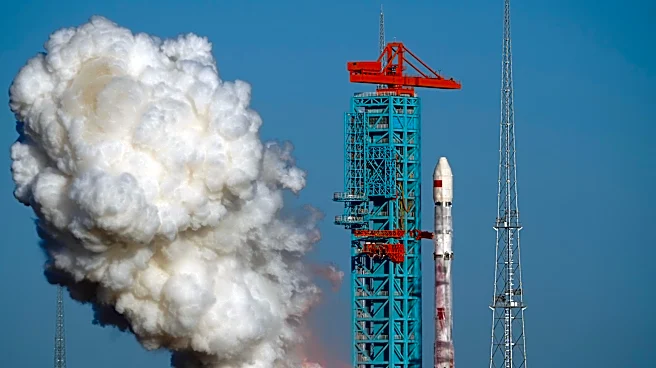
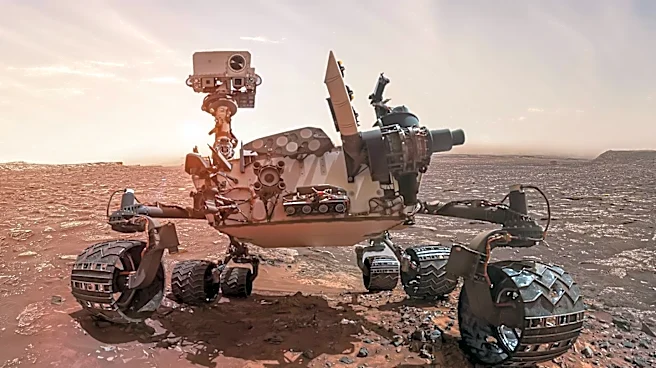
has been deliberately brought back from the Martian system. The mission, led by JAXA, is scheduled for launch on an H3 rocket in Japanese fiscal year 2026, reaching Mars in 2027, and departing in 2030. European partners currently list an October 2026 launch. The mission involves flying alongside Phobos, deploying a small rover named IDEFIX, and performing a brief sampling stop with the main spacecraft. Phobos's gravity is approximately 1,700 times weaker than Earth's, posing unique challenges for landing and sample collection. The MMX spacecraft will spend three years studying Phobos and Deimos, with 11 instruments mapping the surface to identify optimal landing sites. Two distinct collection systems, the C-Sampler and P-Sampler, will be used to gather material from different depths.
Why It's Important?
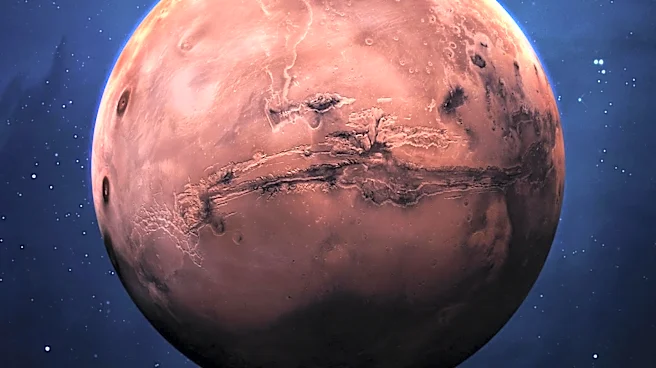
This mission holds significant scientific importance as it aims to resolve the long-standing debate about Phobos's origin: whether it is a captured asteroid or formed from debris ejected from early Mars. The returned samples will undergo detailed analysis on Earth, providing crucial data on mineralogy, chemistry, isotopes, and organic compounds that compact spacecraft instruments cannot match. Such analysis could reveal insights into the formation of moons, the impact history of Mars, and the planet's atmospheric evolution. The mission also represents a major engineering feat, requiring advanced techniques for landing and operating in an extremely low-gravity environment. The successful return of samples will validate these technologies, paving the way for future complex space exploration missions. Furthermore, the potential presence of Martian grains within the Phobos samples could offer a unique window into Mars's past, including its potential for habitability, without the need for a direct Mars sample return mission.
What's Next?
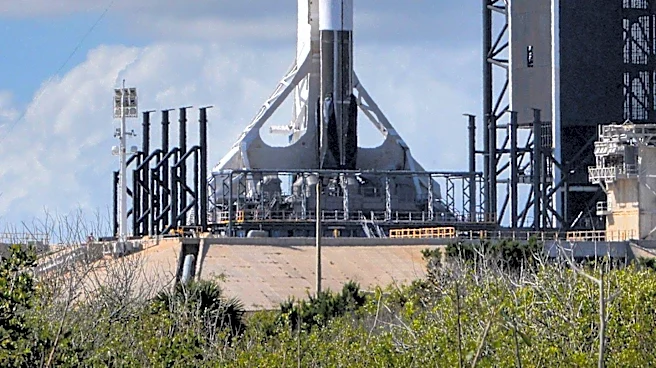
The immediate next step for the MMX mission is its launch, currently scheduled for Japanese fiscal year 2026, with European partners indicating an October 2026 launch. Following a successful launch, the spacecraft will undertake an interplanetary cruise to Mars, arriving in 2027. Upon arrival, MMX will enter orbit around Mars and spend a considerable period studying Phobos and Deimos with its array of instruments. This reconnaissance phase is critical for mapping the moons' surfaces and selecting precise landing sites for the IDEFIX rover and the main sampling operation. The IDEFIX rover will be deployed first to assess the surface conditions, followed by the main spacecraft's brief touchdown for sample collection. The samples will then be sealed in a return capsule, which will travel back to Earth, landing in South Australia around 2031. The success of each phase, particularly the landing and sample collection in microgravity, will be closely monitored, as any deviation could impact the mission's overall objectives.
Beyond the Headlines
Beyond the immediate scientific gains, the MMX mission's success could profoundly influence future space exploration strategies. The ability to collect and return samples from celestial bodies with extremely weak gravity opens up new possibilities for exploring asteroids, comets, and other small moons across the solar system. The partnership with Australia for the sample return highlights the growing international collaboration in space, fostering shared scientific goals and technological advancements. The mission's findings, particularly regarding the origin of Phobos and the potential presence of Martian material, could reshape our understanding of planetary formation and evolution. While not directly searching for life, the analysis of organic compounds could provide clues about the building blocks of life in the early solar system. This mission exemplifies humanity's persistent drive to understand its cosmic neighborhood and the intricate processes that shaped our planetary system.