





What's Happening?
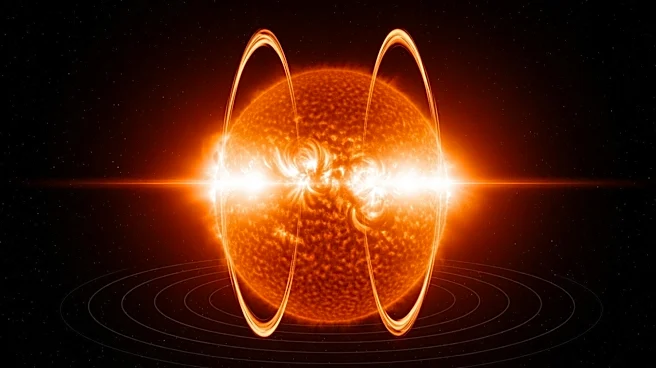
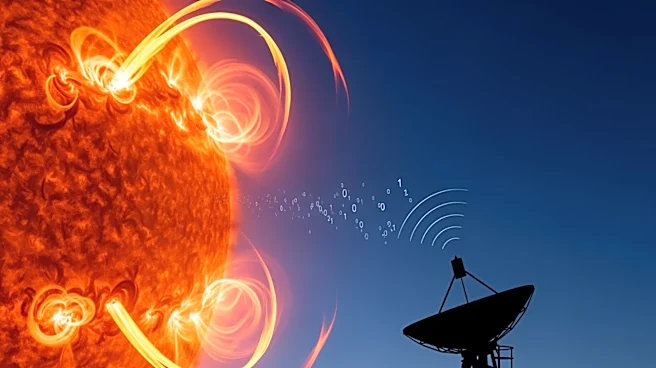
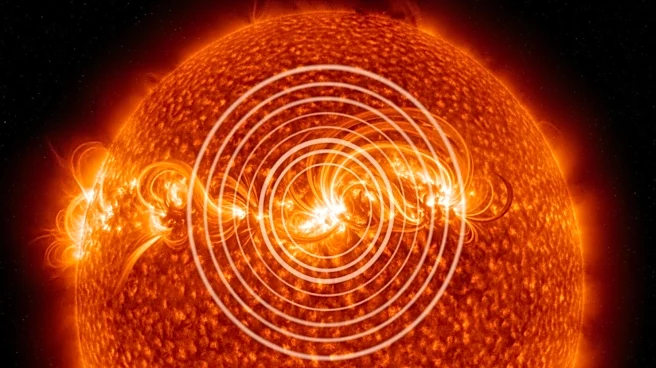
For the first time, scientists have successfully mapped magnetic fields on the far side of the sun, a region not visible from Earth, by analyzing sound waves traveling through the solar interior. This breakthrough allows researchers to detect not only
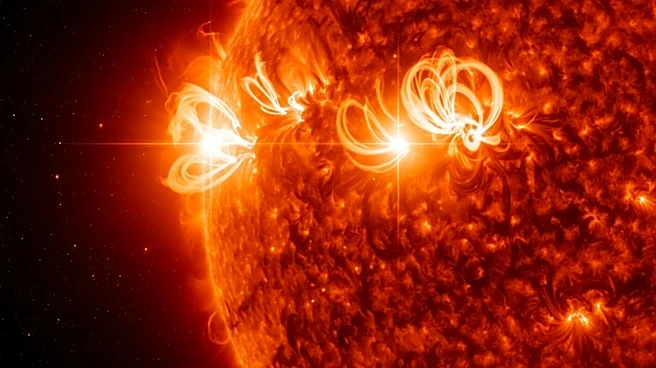
where solar activity is forming but also how it is structured. The study, published in Scientific Reports, utilized helioseismology to identify active regions and determine their magnetic polarity, which is crucial for understanding the potential intensity of solar eruptions. This advancement could improve the ability to anticipate solar flares that may impact satellites and communication systems on Earth.
Why It's Important?
Understanding the magnetic fields on the sun's far side is critical for predicting space weather events that can have significant effects on Earth's technological infrastructure. Solar eruptions can disrupt satellite operations, navigation systems, and power grids. By mapping these magnetic fields, scientists can provide earlier warnings of potential solar flares, allowing for better preparation and mitigation of their impacts. This research enhances the scientific community's ability to monitor and predict solar activity, contributing to the protection of critical technological systems.
What's Next?
The integration of far-side magnetic data into existing solar models is expected to enhance the accuracy of space weather forecasts. Researchers will continue to refine their methods and expand the dataset to include more comprehensive coverage of the sun's magnetic activity. This ongoing research will likely lead to improved early warning systems for solar eruptions, providing more time for industries and governments to prepare for potential disruptions. The findings may also inspire further studies into the sun's magnetic dynamics and their implications for space weather.