



What's Happening?
Ohio lawmakers, specifically Representatives Tristan Rader (D-Lakewood) and David Thomas (R-Jefferson), are drafting a bill aimed at requiring utility companies to reimburse residents for losses incurred during prolonged power outages. This legislative
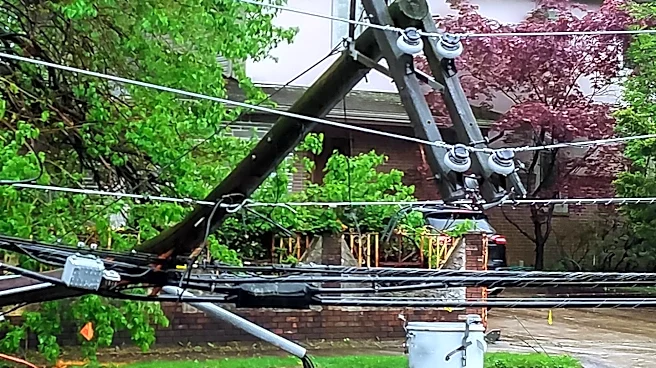
effort comes in response to repeated power outages in areas like Lakewood, where residents have frequently lost food and medicine. The proposed bill would mandate an automatic $50 daily credit for outages lasting over 16 hours under normal conditions, or more than 36 hours during 'gray-sky' conditions. In catastrophic situations, defined as severe weather affecting over 10% of a utility's customers, the credit would apply after 72 hours. Additionally, the bill seeks to provide $250 for lost food and medicine, with potential reimbursement up to $600 if households can provide itemized proof of actual losses. The initiative is driven by the belief that consumers should not bear the financial burden when utility grids fail to provide reliable power, especially when issues stem from aging infrastructure or inadequate maintenance, as suggested by Lakewood councilman Tom Bullock regarding FirstEnergy's grid.
Why It's Important?
This proposed legislation is significant as it directly addresses consumer protection and accountability within the utility sector in Ohio. Currently, there are no state laws allowing ratepayers to seek reimbursement from utilities for spoiled food or medicine due to power outages. The bill would shift some of the financial risk from individual consumers to large investor-owned utilities, such as AES, American Electric Power, Duke Energy, and FirstEnergy, which collectively represent tens of billions of dollars in market capitalization. By imposing financial penalties for extended outages, lawmakers hope to incentivize these companies to invest more in grid maintenance and upgrades, thereby improving service reliability. This could lead to a more equitable distribution of costs associated with infrastructure failures and potentially reduce the frequency and duration of power disruptions for Ohio residents. The measure highlights a growing demand for utilities to be held more responsible for the quality and consistency of their services.
What's Next?
The bill is currently in the drafting phase, with Representatives Rader and Thomas intending to introduce it to the legislature soon. While the exact timeline for its passage is uncertain, lawmakers are pushing for swift action, citing the immediate need for consumer relief. The bipartisan support for the bill suggests a potential for progress, though it will need to navigate the legislative process before the end of the session in December. If passed, the legislation would establish new precedents for utility accountability in Ohio, potentially influencing other states facing similar issues with aging infrastructure and frequent power outages. Utilities would likely need to adjust their operational budgets and maintenance schedules to avoid the proposed penalties, which could lead to increased investment in grid modernization and improved customer service protocols.
Beyond the Headlines
Beyond the immediate financial implications for consumers and utilities, this bill touches upon broader issues of infrastructure resilience and corporate responsibility. The repeated power outages in Lakewood, attributed by local officials to an aging power grid and insufficient maintenance, underscore a systemic challenge facing many regions across the U.S. The legislation could serve as a model for how states can compel utility companies to prioritize infrastructure investments and customer welfare over short-term profits. It also raises questions about the role of regulatory bodies, such as the Public Utilities Commission of Ohio (PUCO), in ensuring that utilities meet their obligations to ratepayers. The debate surrounding this bill could spark further discussions on performance-based ratemaking and other mechanisms to encourage utilities to proactively address infrastructure deficiencies, ultimately contributing to a more reliable and resilient energy grid nationwide.