





What's Happening?
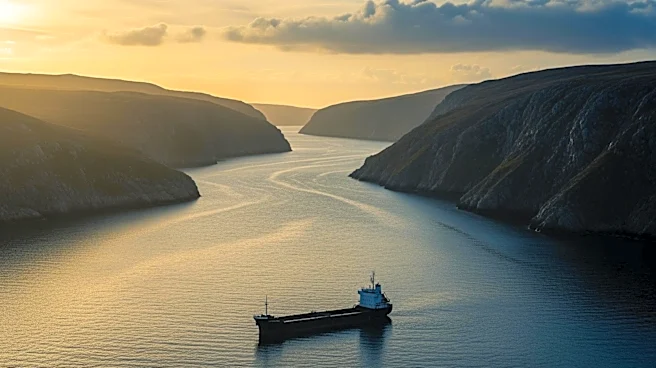
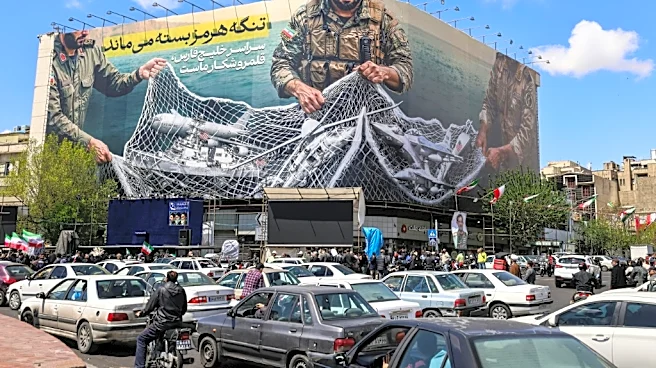
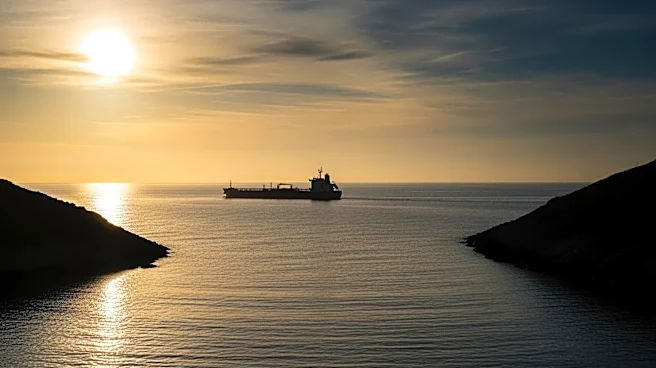
Iran continues to exert control over the Strait of Hormuz, limiting ship passage despite a ceasefire with the United States. Recent shipping data indicates minimal activity, with Iran favoring vessels linked to its allies. The strait remains a critical
point of leverage for Iran as it prepares for negotiations with the U.S. in Islamabad. Iran's control over the strait is seen as a strategic advantage, allowing it to influence negotiations and maintain pressure on the U.S.
Why It's Important?
The Strait of Hormuz is a vital oil shipping route, and Iran's control over it has significant implications for global energy markets. Restricted passage through the strait can lead to increased oil prices and economic instability. Iran's leverage over the strait enhances its negotiating power, potentially affecting U.S. foreign policy and regional dynamics. The situation underscores the importance of securing strategic waterways for global trade and energy security.
What's Next?
Negotiations between the U.S. and Iran are set to take place in Islamabad, with the strait's reopening as a key agenda item. Iran's control over the strait will likely be a central point of discussion, influencing the outcome of the talks. The U.S. may seek to negotiate terms that ensure free passage, while Iran could use the strait as a bargaining chip to gain concessions. The talks could impact future U.S.-Iran relations and regional stability.