
What's Happening?
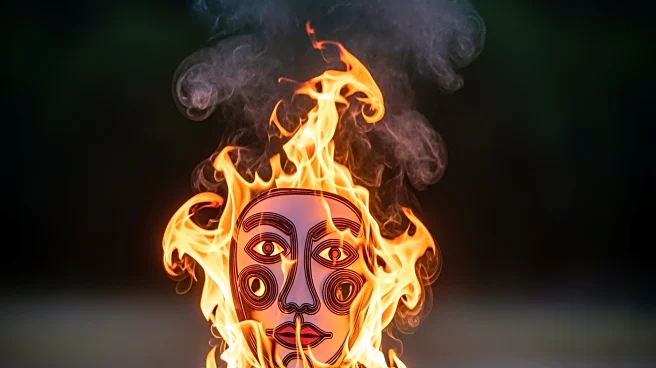
A global protest movement has emerged, symbolized by the act of burning images of Iran's Supreme Leader, Ali Khamenei. This trend began with a video of a young woman, Melia, lighting her cigarette with a burning photo
of Khamenei, which quickly went viral. The act has been replicated by women in various countries, including France, Israel, Ukraine, and Turkey, and has even reached the U.S. Congress, where members Claudia Tenney and Tim Sheehy participated. The movement gained traction during a period of intense protests in Iran, where the government responded with a severe crackdown, including cutting off internet access and using lethal force against demonstrators. The protests, referred to as the 'National Revolution,' are a continuation of the 2022 'Woman, Life, Freedom' movement sparked by the death of Mahsa Amini.
Why It's Important?
The spread of this protest act highlights the global solidarity with Iranian demonstrators and the widespread condemnation of the Iranian regime's actions. The involvement of U.S. Congress members signifies a political dimension, potentially influencing U.S. foreign policy and international relations with Iran. The movement underscores the power of social media in mobilizing global support and drawing attention to human rights abuses. It also reflects the ongoing struggle for women's rights and freedom in Iran, challenging the regime's authority and its enforcement of strict dress codes. The international replication of the act suggests a growing global awareness and support for the Iranian people's fight for freedom and justice.
What's Next?
The continuation of this protest movement could lead to increased international pressure on the Iranian government. It may also inspire further acts of solidarity and protest globally, potentially influencing diplomatic relations and policy decisions. The Iranian regime's response to the ongoing protests will be closely watched, as will the international community's reaction. The movement's impact on Iranian society, particularly regarding women's rights and social norms, could lead to significant cultural and political shifts within the country.
Beyond the Headlines
The protest movement raises questions about the role of digital activism in modern resistance movements. It highlights the potential for symbolic acts to transcend borders and inspire global action. The movement also brings attention to the ethical implications of authoritarian governance and the international community's responsibility to support human rights. The cultural impact of the protests, particularly on Iranian women, could lead to long-term changes in societal norms and gender equality in Iran.