


What's Happening?
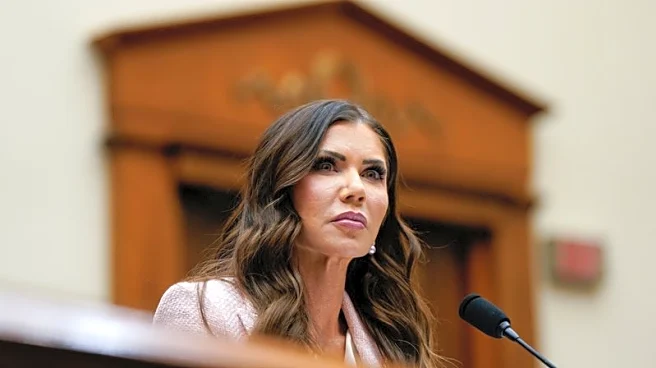
President Trump has removed Kristi Noem as Secretary of the Department of Homeland Security (DHS), appointing U.S. Senator Markwayne Mullin as her successor. Noem's tenure saw a significant shift in DHS's focus towards aggressive immigration enforcement,
which has raised concerns among DHS veterans and the public. The department's transformation under Noem, backed by the White House, has led to increased border security but also sparked debates over the agency's mission and public trust. DHS veterans worry that the administration's focus on deporting millions of people could undermine the agency's original national security mission.
Why It's Important?
The removal of Kristi Noem and the appointment of Markwayne Mullin as DHS Secretary reflect ongoing debates over immigration policy and enforcement in the U.S. The shift towards aggressive immigration enforcement has implications for public safety, trust, and the future of DHS. The administration's focus on deportation has led to concerns about potential violations of civil rights and the impact on immigrant communities. The changes in DHS's mission could influence public perception and policy discussions on immigration, affecting stakeholders in government, civil society, and immigrant advocacy groups.
What's Next?
With Markwayne Mullin as the new DHS Secretary, the department is expected to continue its focus on border security and immigration enforcement. However, there may be calls for a reevaluation of DHS's mission and policies to address concerns raised by veterans and the public. The administration's approach to immigration enforcement could face scrutiny from lawmakers and civil rights organizations, potentially leading to policy adjustments. The ongoing debates over DHS's role and mission may influence future legislative actions and public discourse on immigration and national security.
Beyond the Headlines
The transformation of DHS under Kristi Noem highlights broader issues related to the balance between national security and immigration enforcement. The department's shift towards aggressive immigration policies raises ethical and legal questions about civil rights and the treatment of immigrants. The concerns expressed by DHS veterans reflect a tension between the agency's original mission and its current focus. The situation underscores the need for a nuanced approach to immigration policy that considers public trust, safety, and the rights of individuals. The debates over DHS's role may lead to discussions on the ethical implications of immigration enforcement and the future direction of the department.