



What's Happening?
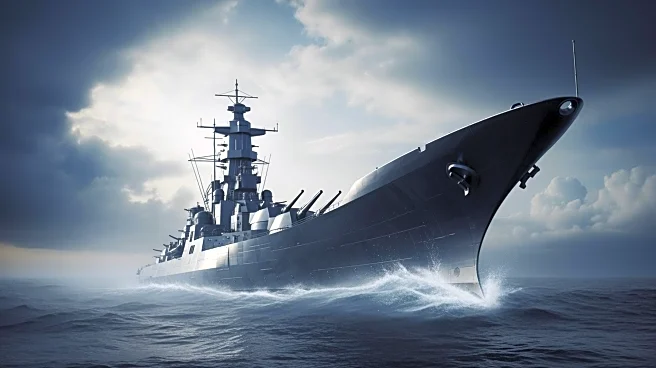
The U.S. Navy's announcement of a new Trump-class battleship design has sparked debate over its feasibility and cost. The proposed battleship, at 35,000 tonnes, would be one of the largest combatants, raising questions about its survivability and strategic
value. Initial design contracts have been awarded to major shipbuilders, but labor and supply chain challenges could delay construction. The Congressional Budget Office estimates the cost of the lead ship to exceed $10 billion, comparable to other major naval assets. The Navy plans to begin construction in the early 2030s, with delivery expected by 2035. However, evolving naval warfare technologies, such as unmanned platforms and hypersonic missiles, may impact the strategic relevance of such large vessels.
Why It's Important?
The potential construction of the Trump-class battleship represents a significant investment in U.S. naval capabilities, with implications for defense spending and military strategy. The high cost and long timeline raise concerns about budgetary priorities and the opportunity cost of investing in traditional large combatants versus emerging technologies. The decision to proceed with the battleship could influence future naval procurement and defense policy, affecting the U.S. Navy's ability to adapt to changing threats and maintain maritime dominance.
What's Next?
The decision to build the Trump-class battleship will likely be influenced by future presidential administrations and budgetary constraints. As the Navy's spending is projected to increase, the allocation of resources to this program will be scrutinized. The evolving nature of naval warfare, with a focus on unmanned systems and advanced missile technology, may prompt a reevaluation of the strategic value of large battleships. Stakeholders, including policymakers and defense analysts, will continue to debate the merits and risks of this significant defense investment.