
What's Happening?
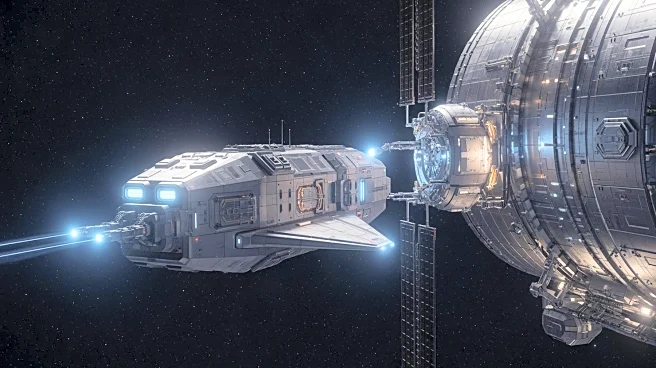
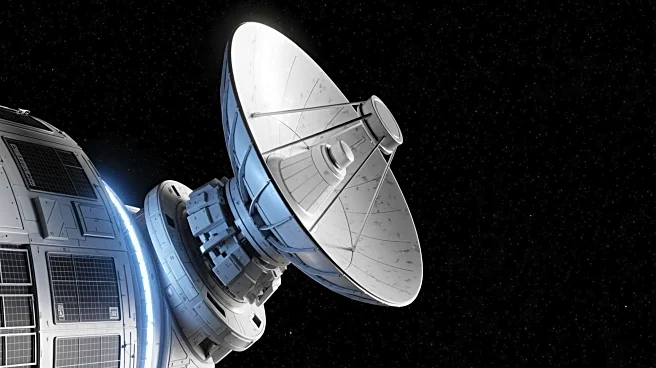
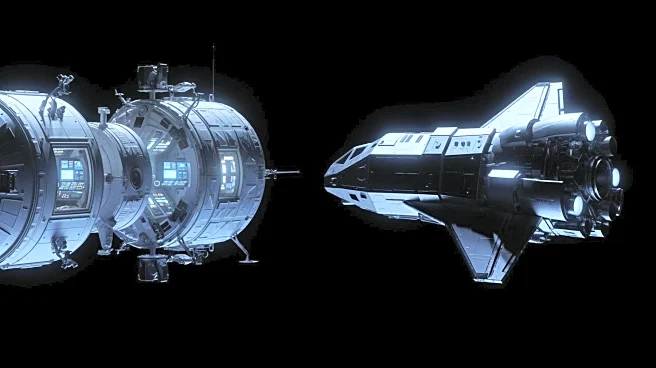
A Russian cargo spacecraft, Progress 94, experienced a critical antenna failure shortly after launch, potentially necessitating a manual docking at the International Space Station (ISS). The spacecraft, launched from Baikonur Cosmodrome, is carrying essential
supplies for the ISS crew. Despite the antenna issue, the spacecraft remains on a stable trajectory, and engineers are working to resolve the problem before the scheduled docking. If unresolved, cosmonaut Sergey Kud-Sverchkov may manually pilot the spacecraft using a backup system.
Why It's Important?
This incident highlights the challenges and complexities of space missions, where even minor technical issues can escalate into significant operational challenges. The potential need for manual docking underscores the importance of human oversight and the resilience of spacecraft design. The situation also reflects the collaborative nature of ISS operations, with NASA and Roscosmos coordinating closely to ensure mission success. The outcome of this mission could influence future protocols and contingency planning for space missions.
What's Next?
Engineers are racing against time to fix the antenna issue before the docking window. If resolved, the spacecraft will proceed with automated docking. If not, manual docking will be attempted, requiring precise coordination between ground teams and the ISS crew. The supplies on board are crucial for ongoing experiments and station maintenance, adding urgency to the mission. The spacecraft is expected to remain docked for six months, serving as a storage and disposal module.