


What's Happening?
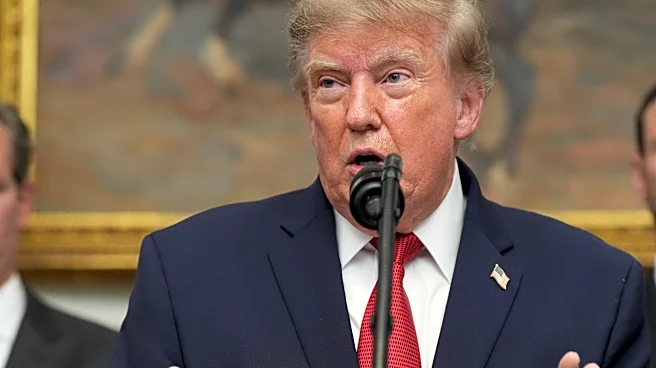
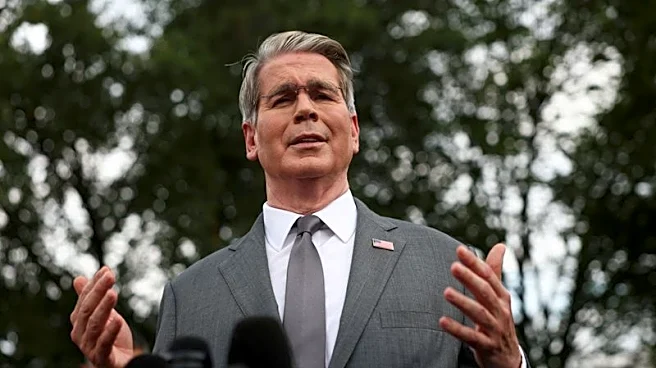
Kevin D. Williamson, a national correspondent at The Dispatch, has published an article titled 'Trump Is Impotent vs. Iran,' criticizing President Trump's approach to Iran. Williamson, who joined The Dispatch in 2022 after 15 years at National Review,
suggests that President Trump's policies or actions regarding Iran have been ineffective. The article, published on August 21, 2026, reflects Williamson's perspective as a writer based in Virginia, known for his 'Wanderland' newsletter and his focus on reporting outside Washington D.C. The piece is part of a broader collection of his political writings.
Why It's Important?
This critique from a prominent conservative publication like The Dispatch is significant because it indicates potential dissent or concern within conservative circles regarding President Trump's foreign policy, specifically concerning Iran. Such commentary can influence public opinion, particularly among a readership that typically aligns with conservative viewpoints. If a segment of the conservative media begins to question the effectiveness of President Trump's strategies, it could lead to broader discussions about the direction of U.S. foreign policy in the Middle East. This could also impact future political discourse and potentially shape the narrative around President Trump's legacy or future political endeavors, especially if the perceived 'impotence' against Iran is seen as a failure to protect U.S. interests or project strength on the global stage.
What's Next?
The publication of this article may prompt further discussion and debate among political commentators, policymakers, and the public regarding the efficacy of President Trump's Iran policy. Other media outlets might pick up on Williamson's critique, leading to a wider examination of the U.S. approach to Iran. Depending on the political climate and ongoing developments in U.S.-Iran relations, this criticism could either gain traction or be dismissed. It could also encourage President Trump's supporters to defend his actions or prompt his detractors to amplify these concerns. The long-term impact will depend on how the situation with Iran evolves and whether President Trump's administration (or a future administration) adjusts its strategy in response to such public and media scrutiny.
Beyond the Headlines
Beyond the immediate political implications, Williamson's article touches on the broader theme of presidential power and its limitations in international relations. The term 'impotent' suggests a perceived inability to achieve desired outcomes, which can have deeper psychological and strategic ramifications for a nation's standing. This critique could also reflect a growing sentiment that traditional foreign policy tools are insufficient to address complex geopolitical challenges like those posed by Iran. It might also spark a re-evaluation of the effectiveness of various diplomatic, economic, and military strategies employed by the U.S. in dealing with adversaries, prompting a deeper look into the philosophical underpinnings of American foreign policy and the challenges of projecting influence in a multipolar world.