
What's Happening?
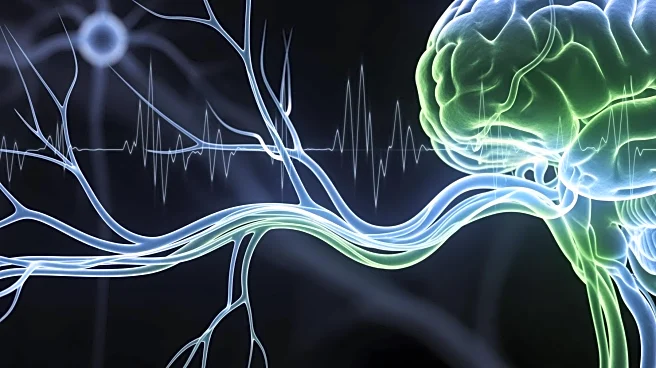
A recent study has explored the relationship between cerebral vasomotion and neurovascular coupling, using animal models to investigate how these processes interact. The research involved surgical procedures
on rats to measure blood flow and neural activity, utilizing advanced imaging techniques. The study found that vasomotion, or the rhythmic oscillation of blood vessels, can occur independently of neural activity, challenging previous assumptions about their interdependence. This discovery was made by manipulating blood pressure and observing changes in blood volume and neural signals.
Why It's Important?
Understanding the dissociation between vasomotion and neurovascular coupling has significant implications for neuroscience and medical research. It suggests that blood flow changes in the brain may not always reflect neural activity, which could impact the interpretation of brain imaging studies. This finding could lead to more accurate diagnostic tools and treatments for neurological conditions, as it highlights the need to consider vascular factors separately from neural activity. The research also opens new avenues for studying brain function and disorders, potentially leading to breakthroughs in understanding diseases like stroke and dementia.