




What's Happening?
The Batavia Public Library in Illinois is set to begin a 12-month interior renovation project in early November, aiming to update its facilities and offerings. The library, located at 10 S. Batavia Ave., will remain open to patrons throughout the construction
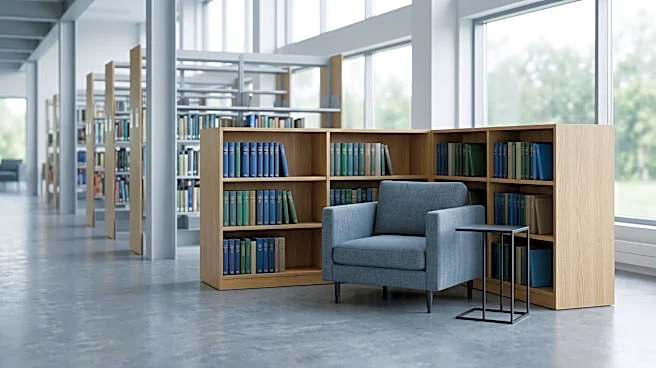
period, which is expected to conclude in the fall of the following year. The Batavia Public Library Board approved a budget capped at $14 million for the project last December. Funding for the renovation will come from a combination of existing reserves and bond issuances, structured to avoid increasing the library's tax rate. The plan involves initially using savings and then issuing 20-year maturity bonds, supported within the existing operating fund. The current library building is 24 years old, and the renovations are designed to address various aspects of its services, including refreshing spaces for children, teens, and adults, updating meeting and program areas, and creating more flexible spaces for reading, studying, gathering, and working. Accessibility, infrastructure, and technology improvements, along with the replacement of finishes and furnishings, are also part of the project.
Why It's Important?
This renovation project is significant for the Batavia community as it aims to modernize a key public institution to better serve its evolving needs. According to Executive Director Josephine Tucci, the way people use libraries has changed considerably over the past two decades, making these updates crucial for the library's relevance and utility. By enhancing spaces for different age groups and purposes, the library seeks to foster a more engaging and functional environment for its patrons. The commitment to keeping the library open during construction minimizes disruption to essential community services, ensuring continued access to resources. Furthermore, the funding strategy, which avoids an increase in property taxes, demonstrates a fiscally responsible approach to public infrastructure improvements, benefiting residents without imposing additional financial burdens. The project also addresses behind-the-scenes operations to improve staff efficiency, which can lead to better service delivery for the community.
What's Next?
Construction is slated to commence in early November and is projected to last for 12 months, concluding in the fall of the following year. While the library will remain open, patrons should anticipate some temporary disruptions, including the relocation or unavailability of certain areas, services, and collections. The construction will proceed in phases, which may lead to temporary shifts in building areas, potential noise, and adjusted pathways. Some library programs and events are expected to be held offsite during parts of the renovation. The library is actively engaging the community by hosting a "Renovation Sneak Peek Open House" on September 20 at 2 p.m. This event will provide residents with an overview of the renovation plans, including access to plans and renderings, and an explanation of how operations will be affected during the work. This proactive communication aims to manage community expectations and gather feedback.
Beyond the Headlines
The Batavia Public Library's renovation reflects a broader trend in how public libraries are adapting to contemporary community needs. Beyond being mere repositories of books, modern libraries are transforming into dynamic community hubs that offer diverse services, flexible spaces for collaboration and learning, and advanced technological resources. This project underscores the importance of continuous investment in public infrastructure to ensure it remains relevant and accessible. The emphasis on creating flexible spaces and improving technology highlights a recognition of changing educational and social patterns, where digital literacy and adaptable environments are increasingly vital. The library's commitment to maintaining services during a year-long renovation also speaks to its role as an indispensable community anchor, demonstrating resilience and dedication to its patrons even amidst significant operational challenges. This initiative could serve as a model for other public institutions seeking to modernize while minimizing community impact.