


What's Happening?
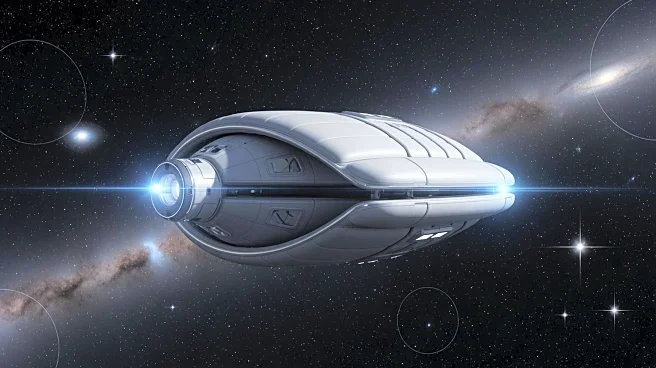
Max Space, a startup, has announced plans for its private space habitat, Thunderbird Station, which can expand to 12,300 cubic feet from a single launch. This concept involves launching space habitats that inflate in space, offering more room for astronauts.
The Thunderbird Station is designed to be launched by a SpaceX Falcon 9 rocket by 2029. This development comes as NASA seeks private industry solutions to replace the International Space Station (ISS), which is set to retire in five years. The Thunderbird Station features large windows for views and screens for entertainment and communication. Max Space plans to launch a prototype by 2027, with the habitat potentially being used for lunar and Mars missions.
Why It's Important?
The introduction of inflatable space habitats represents a significant shift in space exploration, offering a cost-effective and efficient alternative to traditional space station construction. This innovation could revolutionize how space habitats are deployed, providing more space for scientific research and human habitation. As the ISS approaches retirement, the need for a successor is critical for maintaining continuous human presence and research capabilities in space. Max Space's concept could fill this gap, supporting NASA's objectives and fostering private sector involvement in space exploration. The success of this project could also pave the way for future missions to the Moon and Mars, expanding human exploration beyond Earth's orbit.
What's Next?
Max Space will focus on developing and testing its prototype, addressing engineering challenges such as protection against micrometeoroids and space debris. The company will also seek partnerships and funding to support its ambitious timeline. As the project progresses, it will be crucial to demonstrate the feasibility and safety of inflatable habitats. NASA and other stakeholders will monitor these developments closely, as the success of such projects could influence future space exploration strategies and collaborations.