








What's Happening?
The Chesapeake and Ohio Canal National Historical Park has been awarded a grant as part of $12 million in funding announced by the National Park Foundation. U.S. Rep. Riley Moore (R-W.Va.) highlighted this investment, emphasizing its role in supporting
preservation and recreation along the C&O Canal, which spans the Potomac River region bordering West Virginia. The National Park Foundation distributed grants for 30 projects across more than 40 national parks, aiming to pilot new technologies and methods for managing natural, cultural, and historic resources, enhancing public safety, and improving visitor education. Specifically, the C&O Canal Trust will utilize its grant to implement a park-wide water-level monitoring and recreation safety system. This initiative is designed to bolster flood preparedness, increase visitor safety, and safeguard the canal's historic infrastructure. This round of grants marks the second set of innovation grants from the National Park Foundation in 2026, bringing their total investment in innovation projects across the National Park System to nearly $25 million this year.
Why It's Important?
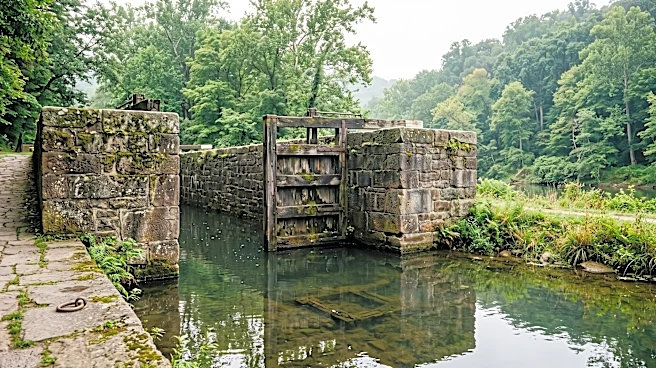
This grant is significant for several reasons, primarily for its direct impact on the preservation and safety of a vital national historical park. The C&O Canal National Historical Park, with its 184.5-mile historic towpath and over 1,100 historic structures, including locks, aqueducts, and dams, represents a crucial part of American heritage. The implementation of a water-level monitoring and recreation safety system will directly address potential hazards like flooding, which can threaten both the park's infrastructure and visitor well-being. By improving flood preparedness, the grant helps protect irreplaceable historical assets from damage, ensuring their longevity for future generations. Furthermore, enhanced visitor safety measures will likely encourage more public engagement with the park, supporting local tourism and recreational activities. The National Park Foundation's broader strategy of funding innovative projects also means that successful approaches developed at the C&O Canal could serve as models for other national parks facing similar challenges, thereby extending the positive impact of this investment across the entire National Park System.
What's Next?
The immediate next step will involve the C&O Canal Trust initiating the installation of the park-wide water-level monitoring and recreation safety system. This project will likely involve detailed planning, procurement of technology, and implementation phases, with ongoing monitoring and adjustments as the system becomes operational. The success of this project could lead to its replication in other national parks, as the National Park Foundation aims to develop scalable solutions. Stakeholders, including park visitors, local communities, and conservation groups, can anticipate improved safety measures and better-preserved historical resources. U.S. Rep. Riley Moore and other political leaders will likely continue to monitor the project's progress and advocate for further investments in national parks, especially if this initiative proves effective in enhancing both safety and preservation. The National Park Foundation will also continue its evaluation of these innovative projects, potentially influencing future grant allocations and strategic priorities for the National Park System.
Beyond the Headlines
Beyond the immediate benefits of improved safety and preservation, this grant highlights a broader trend in national park management: the integration of technology to address complex environmental and safety challenges. The deployment of a water-level monitoring system reflects a proactive approach to climate change impacts, such as increased flood risks, which threaten historical sites and natural landscapes. This technological adoption also underscores a shift towards data-driven decision-making in park management, allowing for more efficient resource allocation and more effective risk mitigation. Ethically, the investment reinforces the commitment to protecting public lands and ensuring safe access for all citizens, balancing historical preservation with modern recreational needs. Culturally, the C&O Canal represents a significant historical narrative of American industrial and transportation development, and its continued preservation through such grants helps maintain a tangible link to the nation's past, fostering historical awareness and appreciation among visitors. This initiative could also inspire further public-private partnerships in conservation efforts, leveraging philanthropic support to augment federal funding for national treasures.