








What's Happening?
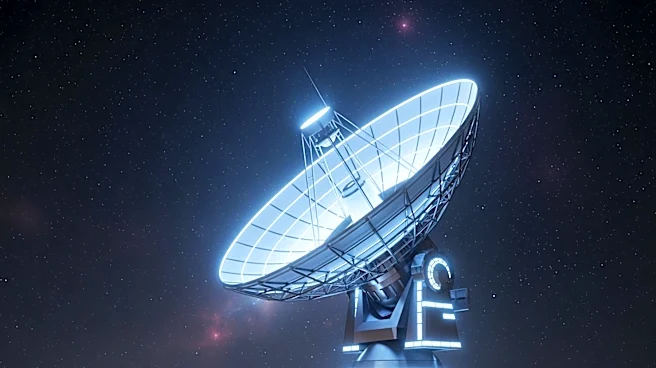
NASA's Deep Space Network (DSN) faced significant challenges during the Artemis I mission due to the high demand for communication resources. The network, which supports a variety of NASA's robotic science missions, was stretched to its limits as it prioritized
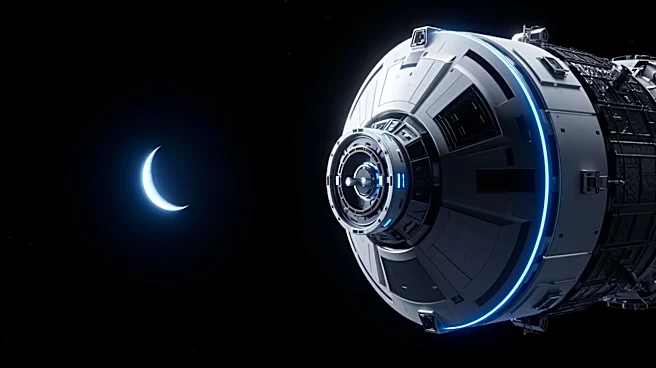
the Artemis I mission, leading to reduced or delayed data downlinks from other missions like the James Webb Space Telescope and Mars rovers. However, during the recent Artemis II mission, which launched on April 1, NASA implemented new processes to better manage the network's resources. These changes included improved coordination and scheduling, which helped the DSN effectively support the mission. The Artemis II mission, with a crew of four, required extensive data communication as the Orion capsule traveled over a quarter of a million miles from Earth. Despite the increased data needs, the mission's shorter duration of just over nine days, compared to Artemis I's 25 days, helped alleviate some of the communication burdens.
Why It's Important?
The successful management of the Deep Space Network during the Artemis II mission is crucial for NASA's future deep space endeavors. The DSN is a vital component of NASA's space exploration infrastructure, enabling communication with spacecraft across the solar system. The lessons learned from Artemis I and the subsequent improvements for Artemis II demonstrate NASA's ability to adapt and optimize its resources. This capability is essential as NASA plans more complex missions, including those involving human spaceflight. Efficient communication networks are critical for mission success and safety, particularly as NASA aims to return humans to the Moon and eventually send astronauts to Mars. The ability to manage high-demand scenarios ensures that NASA can continue to support a wide array of scientific missions while pursuing ambitious exploration goals.
What's Next?
Looking ahead, NASA will likely continue to refine its communication strategies to support future Artemis missions and other deep space endeavors. The agency may explore further technological advancements to enhance the capacity and efficiency of the Deep Space Network. As NASA prepares for Artemis III and beyond, which will involve landing astronauts on the Moon, the demand on the DSN will increase. Ensuring robust communication capabilities will be a priority to support these missions' complex requirements. Additionally, NASA may collaborate with international partners to expand its communication infrastructure, potentially integrating new technologies to handle the growing demands of space exploration.