






What's Happening?
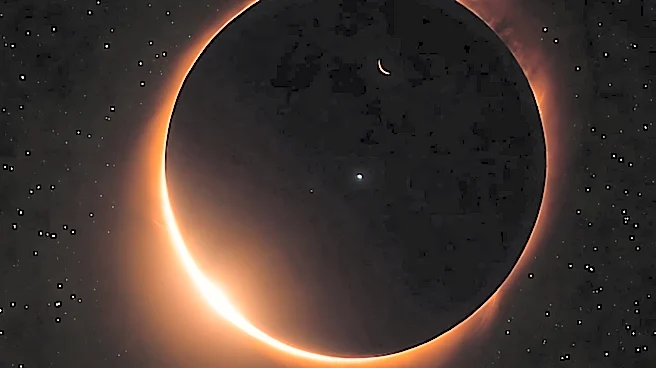
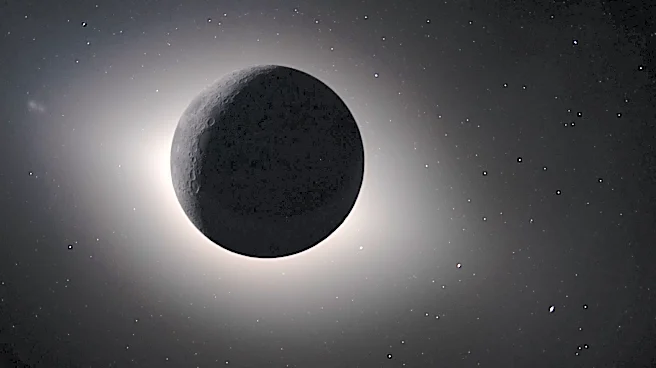
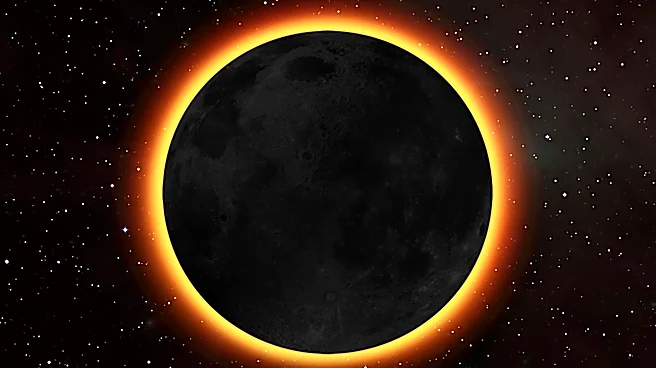
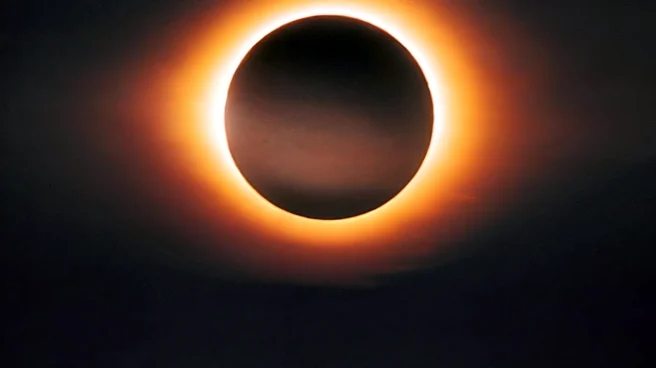
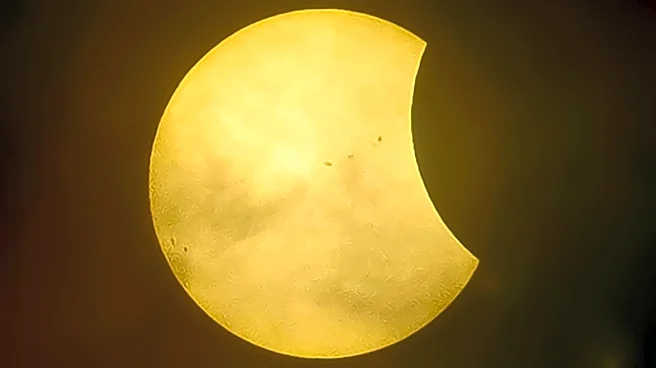
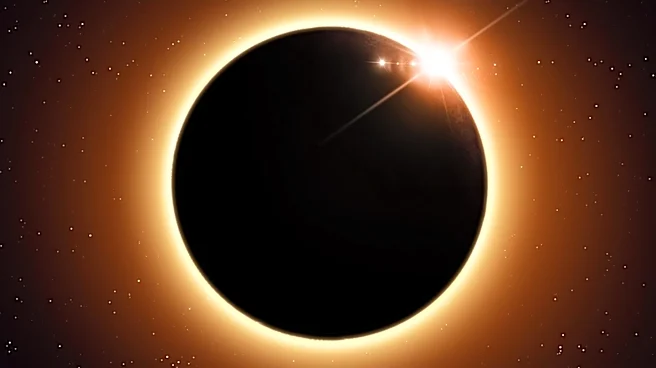
NASA has announced that a partial solar eclipse will be visible in the Washington D.C. region on August 12, 2026. The eclipse will start at 1:17 p.m. and end at 2:27 p.m., obscuring about 1% of the sun in the area. In contrast, a total eclipse will be visible in parts
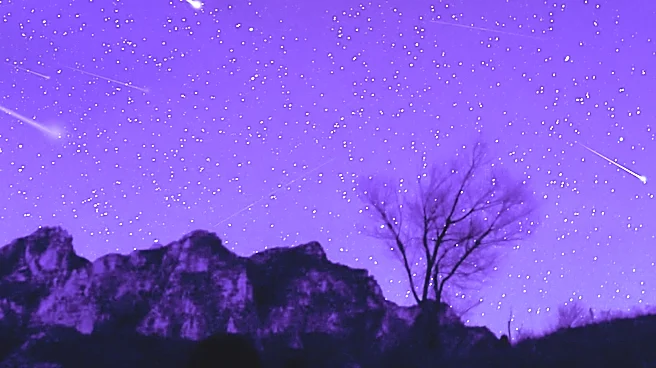
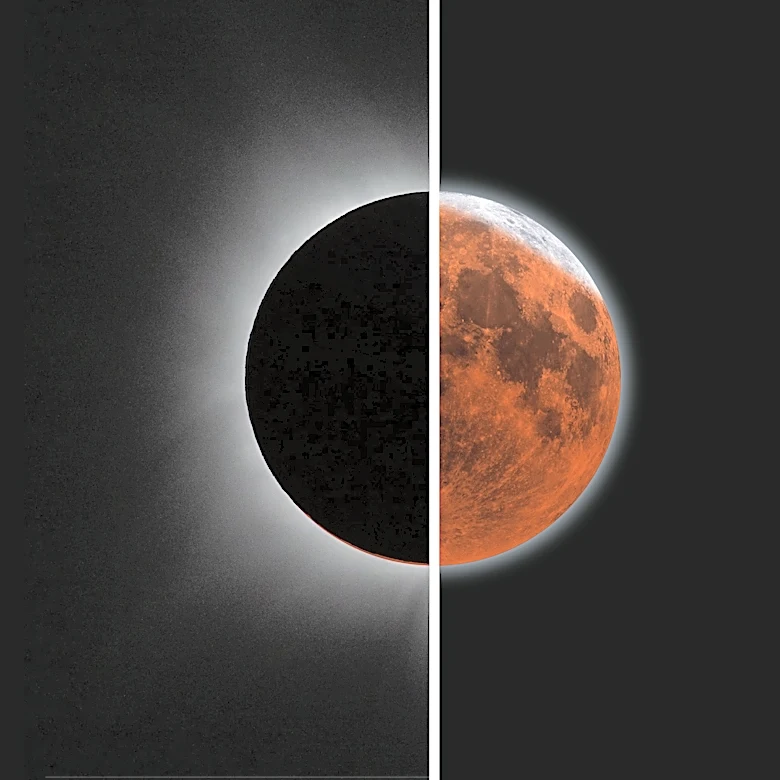
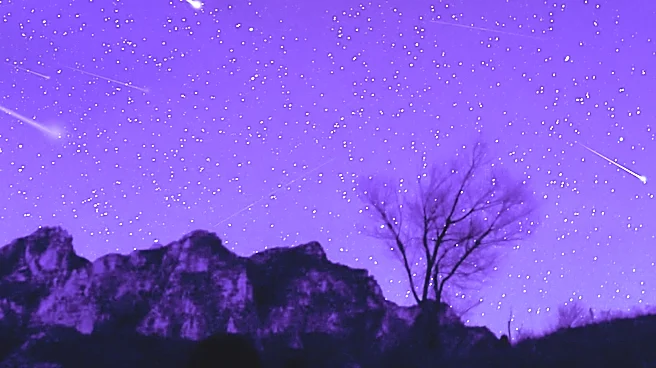
of Greenland, Iceland, northern Russia, the Atlantic Ocean, Spain, and a small corner of Portugal. NASA advises viewers to adhere to strict safety guidelines to prevent eye damage, recommending the use of solar eclipse glasses or solar filters from reputable suppliers. The event is part of a series of celestial occurrences in August, including the Perseid meteor shower and a partial lunar eclipse later in the month.
Why It's Important?
The partial solar eclipse offers a unique opportunity for residents in the D.C. region to engage with astronomical phenomena, fostering public interest in space science and education. Such events can inspire educational activities and community gatherings, promoting awareness about the importance of eye safety during solar observations. Additionally, the eclipse is part of a broader series of celestial events that highlight the dynamic nature of our solar system, potentially encouraging interest in STEM fields among students and the general public.
What's Next?
Following the partial solar eclipse, the D.C. region will experience a deep partial lunar eclipse on August 27-28, 2026. This will provide another opportunity for sky watchers to observe and learn about lunar phenomena. NASA and local observatories may organize viewing events and educational programs to enhance public engagement. The continuation of such celestial events throughout the month could lead to increased interest in astronomy and related sciences.