



What's Happening?
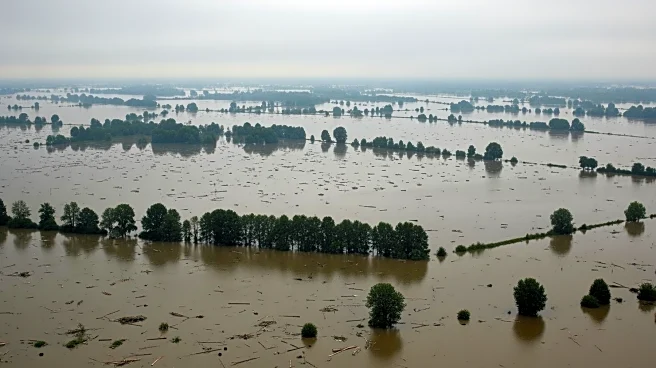
In the Indonesian region of Aceh Tamiang, residents are struggling to access aid as the death toll from recent floods and landslides on Sumatra island has risen to over 900. The natural disaster, induced by cyclones, has affected three provinces, with
410 people still missing. Survivors are navigating through difficult terrain, including slippery logs and overturned vehicles, to reach aid distribution centers. Local officials are urging the national government to declare a national emergency to unlock additional resources for relief efforts. Environmental groups have attributed the severity of the floods to deforestation linked to mining and logging activities. The Indonesian environment ministry has temporarily halted operations of companies suspected of contributing to the deforestation, pending environmental audits.
Why It's Important?
The escalating death toll and the call for a national emergency highlight the severe impact of natural disasters exacerbated by human activities such as deforestation. The situation underscores the urgent need for sustainable environmental practices and effective disaster management strategies. The halt on operations of implicated companies could lead to significant economic and regulatory consequences, affecting industries reliant on natural resources. The disaster also raises questions about the adequacy of current infrastructure and emergency response capabilities in Indonesia, potentially prompting policy changes and increased international aid.
What's Next?
The Indonesian government may face increased pressure to implement stricter environmental regulations and improve disaster preparedness. The halted companies will likely undergo environmental audits, which could result in fines or operational changes. International aid and support may be sought to assist in recovery efforts. The situation could also lead to broader discussions on climate change and its impact on vulnerable regions, potentially influencing global environmental policies.