



What's Happening?
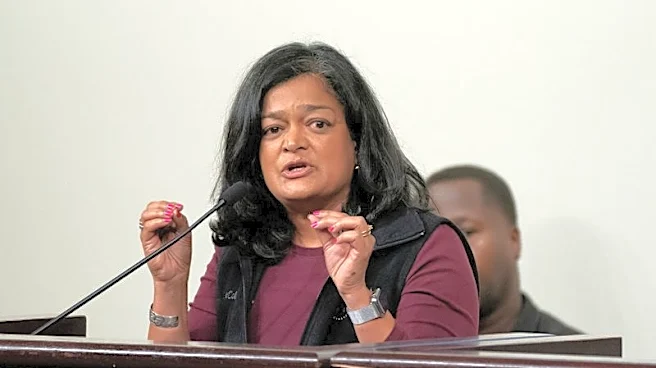
Two U.S. lawmakers, Democratic Representatives Pramila Jayapal of Washington and Jonathan Jackson of Illinois, have called for a permanent solution to Cuba's ongoing energy crisis, which they attribute to a U.S. energy blockade. During their visit to Cuba,
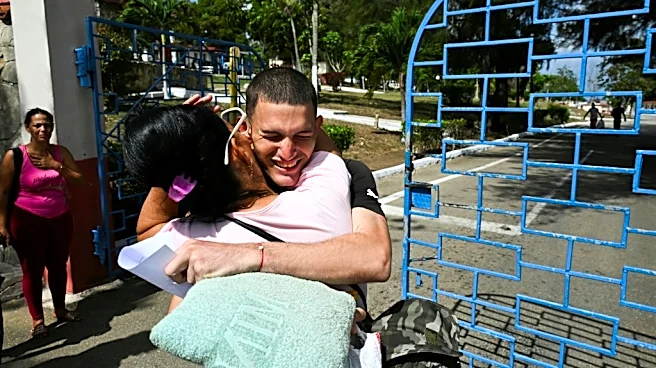
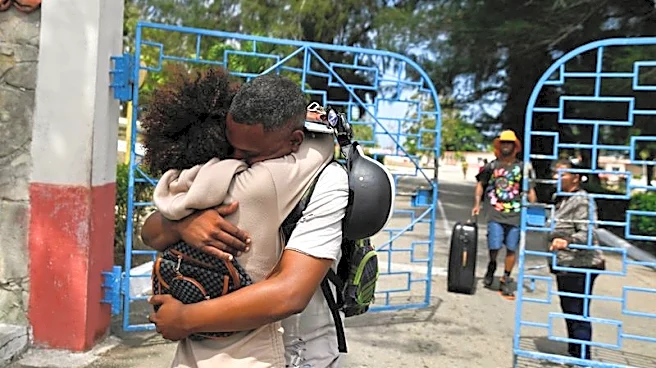
they met with Cuban President Miguel Díaz-Canel and other officials, discussing the severe impact of the blockade on the island's infrastructure. Díaz-Canel criticized the blockade, particularly the energy embargo imposed by the U.S., and expressed willingness to engage in bilateral dialogue to resolve differences. The lawmakers noted recent Cuban initiatives, such as economic openings to investments by Cuban Americans and the pardoning of over 2,000 prisoners, as signs of readiness for negotiation. The blockade has led to significant hardships for Cubans, including blackouts, fuel shortages, and disruptions in essential services.
Why It's Important?
The energy blockade has exacerbated Cuba's economic crisis, affecting daily life and essential services. The lawmakers' call for negotiation highlights the potential for improved U.S.-Cuba relations, which could lead to lifting sanctions and alleviating humanitarian issues. The blockade's impact on Cuba's infrastructure underscores the broader geopolitical tensions between the U.S. and Cuba, with implications for regional stability and international diplomacy. Resolving the crisis could benefit both Cuban and American interests, fostering economic opportunities and reducing political hostilities.
What's Next?
Jayapal and Jackson plan to prepare a report and advocate for initiatives within the U.S. House of Representatives to lift sanctions against Cuba. Their efforts aim to address the humanitarian crisis and promote a free flow of energy in the region. The Cuban government has expressed readiness for dialogue, and further diplomatic engagements may occur. The situation remains complex, with potential resistance from U.S. political factions opposed to easing sanctions.