
What's Happening?
The Israeli shark diving community is advocating for the reopening of Hadera beach, which has been closed since a fatal shark attack nearly a year ago. The incident involved the death of diver Barak Tzach
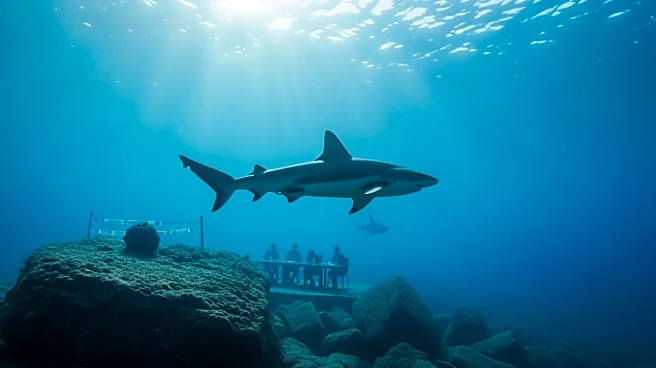
near the Hadera stream outlet, a popular site for observing sharks due to the warm waters discharged by the nearby Orot Rabin power plant. This area has long attracted both sharks and divers, but the attack led to a ban on diving activities. Eliran Ovadia, a diving instructor and owner of the Middle East Divers school, argues that sharks are not inherently dangerous and that their fearsome reputation is largely due to media portrayals. The diving community emphasizes the ecological importance of sharks and their role in maintaining marine balance. Despite the ban, enthusiasts continue to push for regulated access to the site, highlighting the educational and ecological value of shark observation.
Why It's Important?
The closure of Hadera beach has significant implications for both the local diving community and the broader understanding of marine ecosystems. Sharks play a crucial role in maintaining ecological balance by controlling the population of other marine species. The diving community's push for reopening the beach underscores the need for public education about sharks and their ecological significance. The situation also highlights the tension between public safety concerns and environmental conservation efforts. If the beach remains closed, it could limit opportunities for scientific research and public engagement with marine life, potentially leading to a lack of awareness about the importance of sharks in the ecosystem.
What's Next?
The diving community is considering legal action to challenge the ban on accessing Hadera beach. They have organized a petition and are exploring the possibility of a class-action lawsuit to advocate for regulated diving activities. The outcome of these efforts could set a precedent for how similar situations are handled in the future, balancing public safety with environmental education and conservation. Authorities may need to consider implementing safety measures that allow for controlled access to the site, ensuring both the protection of divers and the preservation of the ecological role of sharks.
Beyond the Headlines
The debate over the reopening of Hadera beach reflects broader societal attitudes towards sharks and marine conservation. The fear of sharks, often fueled by media portrayals, contrasts with the scientific understanding of their ecological importance. This situation presents an opportunity to shift public perception and promote a more nuanced view of sharks as vital components of marine ecosystems rather than mere threats. Additionally, the case highlights the potential for community-driven conservation efforts to influence policy and public awareness, demonstrating the power of grassroots advocacy in shaping environmental discourse.