





What's Happening?
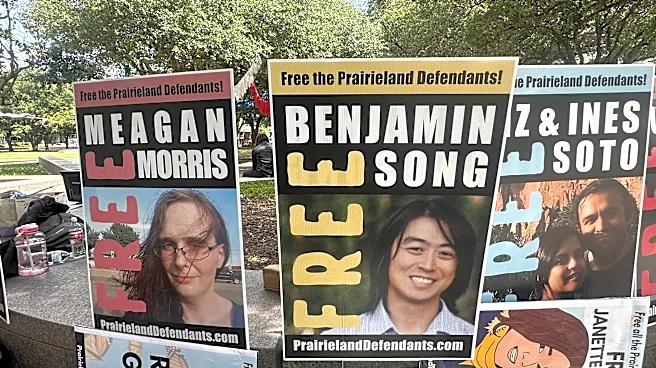
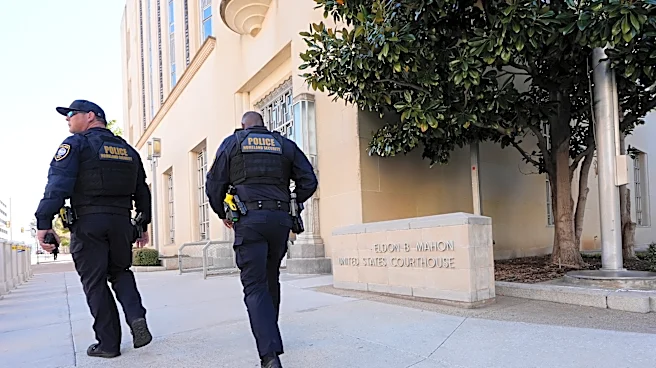
Representative Rashida Tlaib, a Democrat from Michigan, has faced backlash for her defense of antifa members convicted of a violent attack on a Texas immigration facility. The incident, which federal prosecutors labeled as an act of terrorism, resulted
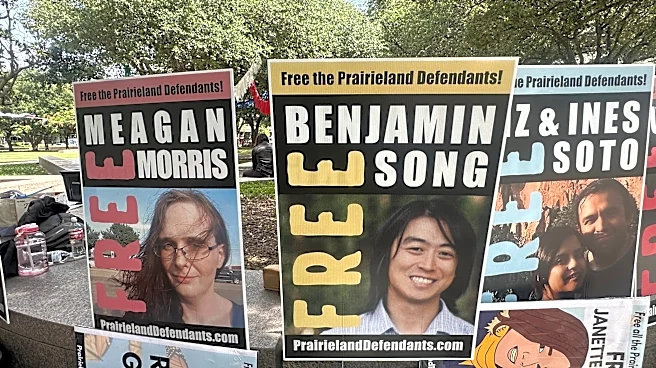
in a 100-year prison sentence for Benjamin Song, a former Marine Corps reservist, who was convicted of attempted murder for shooting a police officer. Seven other members of the North Texas antifa cell received sentences ranging from 30 to 70 years for various charges, including providing material support to terrorists and conspiracy to use weapons. Tlaib criticized the sentences as unjustified and condemned a 2025 memo by President Trump that classified antifa as a domestic terrorist organization. Her comments have drawn sharp criticism from conservatives, who argue that she is excusing violent behavior.
Why It's Important?
The controversy surrounding Tlaib's comments highlights the ongoing national debate over the classification and treatment of antifa as a domestic terrorist organization. This case marks the first successful federal prosecution of antifa members on terrorism charges, setting a precedent for how similar cases might be handled in the future. The incident underscores the polarized political climate in the U.S., where actions and statements by public figures can quickly become flashpoints for broader ideological conflicts. The criticism from conservatives reflects concerns about perceived leniency towards groups associated with violent protests, while Tlaib's defense points to fears of government overreach and the potential suppression of dissent.
What's Next?
The legal and political ramifications of this case are likely to continue as appeals and further legal challenges may arise. The classification of antifa as a terrorist organization could lead to increased scrutiny and legal actions against similar groups, potentially affecting civil liberties and protest rights. The response from the Biden administration and other political leaders will be crucial in shaping future policies regarding domestic terrorism and law enforcement practices. Additionally, the public's reaction to Tlaib's comments may influence her political standing and the broader discourse on political violence and free speech.