


What's Happening?
Researchers from UC Berkeley and Johns Hopkins University have identified traces of two previously unknown hominin species in modern human DNA. These 'ghost ancestors' are believed to have interbred with Homo sapiens around 50,000 years ago. The study,
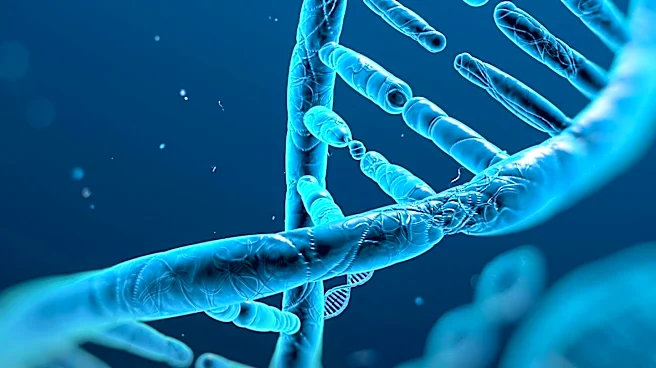
published in the journal Science, suggests that these ancient relatives contributed to the genetic makeup of all modern humans. The findings were made using a new method called TRACE, which analyzes modern human genomes to identify ancient DNA segments. This discovery adds complexity to the understanding of human evolution, indicating a more interconnected history than previously thought.
Why It's Important?
The discovery of 'ghost ancestors' in human DNA provides significant insights into the evolutionary history of Homo sapiens. It challenges the traditional view of human evolution as a linear process, suggesting instead a network of interbreeding populations. This research could reshape scientific understanding of genetic diversity and adaptation, particularly in relation to immunity and metabolic functions. The findings may also influence future studies on human ancestry and the development of genetic traits, offering a broader perspective on how ancient interbreeding events have shaped modern human populations.
Beyond the Headlines
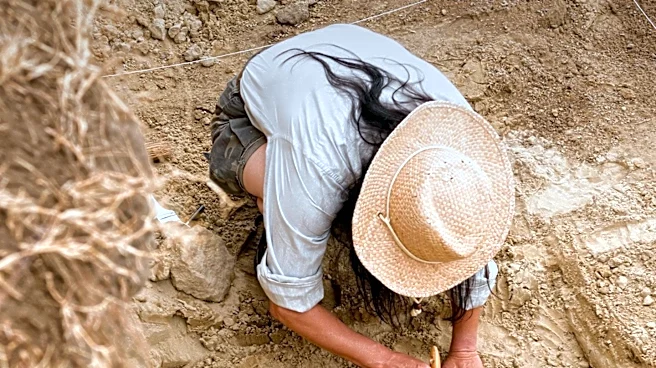
The identification of these 'ghost ancestors' raises questions about the ethical implications of genetic research and the potential for uncovering sensitive information about human ancestry. It also highlights the limitations of current archaeological methods, as these ancestors have not been identified through fossil records. The study underscores the importance of interdisciplinary approaches in uncovering the complexities of human history, combining genetics, archaeology, and anthropology. As research continues, there may be further revelations about other unknown ancestors and their contributions to human evolution.