
What's Happening?
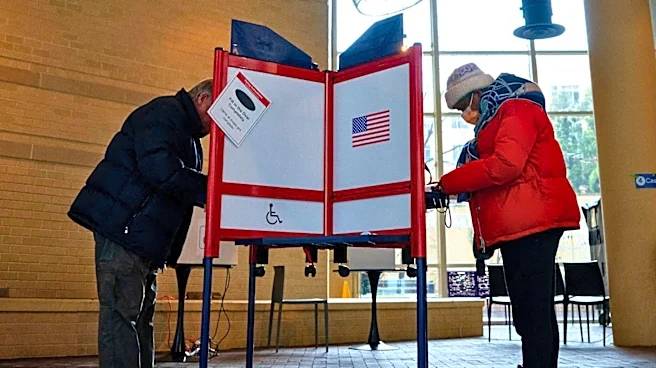
Connecticut is gearing up for a significant primary election day, with key races in both the gubernatorial and Congressional districts. Democratic Governor Ned Lamont is facing a primary challenge from
Rep. Josh Elliott, who advocates for more progressive policies, including increased taxes on the wealthy to fund municipal aid. Lamont, seeking a historic third term, emphasizes his achievements in office, such as raising the minimum wage and advocating for an income tax cut. In the 1st Congressional District, incumbent John Larson faces challengers who call for new ideas and leadership. On the Republican side, candidates in the 4th and 5th Congressional Districts are preparing to challenge Democratic incumbents Jim Himes and Jahana Hayes. The primaries are seen as a test of party strategies and voter preferences in a state that has leaned Democratic in recent years.
Why It's Important?
These primaries are crucial as they could reshape the political landscape in Connecticut, a state that has been a Democratic stronghold. Governor Lamont's race is particularly noteworthy as he is the first incumbent governor in 48 years to face a primary challenge, highlighting internal party dynamics and the push for more progressive policies. The outcomes of these races could influence the Democratic Party's direction in the state and potentially impact national politics. For Republicans, the primaries represent an opportunity to gain traction in a state where they have struggled to win Congressional seats. Success in these races could signal a shift in voter sentiment and provide momentum for the party in future elections.
What's Next?
Following the primaries, the winners will advance to the general election, where they will face off against incumbents or nominees from the opposing party. The general election campaigns are expected to focus on key issues such as economic policies, healthcare, and education funding. Candidates will need to appeal to a broad electorate, including moderates and independents, to secure victory. The results of these elections could have significant implications for the state's political alignment and influence future policy decisions. Both parties will be closely watching the outcomes to gauge voter sentiment and adjust their strategies accordingly.